Kepler AI Coding: The Best AI Coding Workflow with GitKraken Kepler in 2026
Master Kepler AI coding to run parallel agents, automate multi-repo workflows, and ship clean, merge-ready pull requests faster.
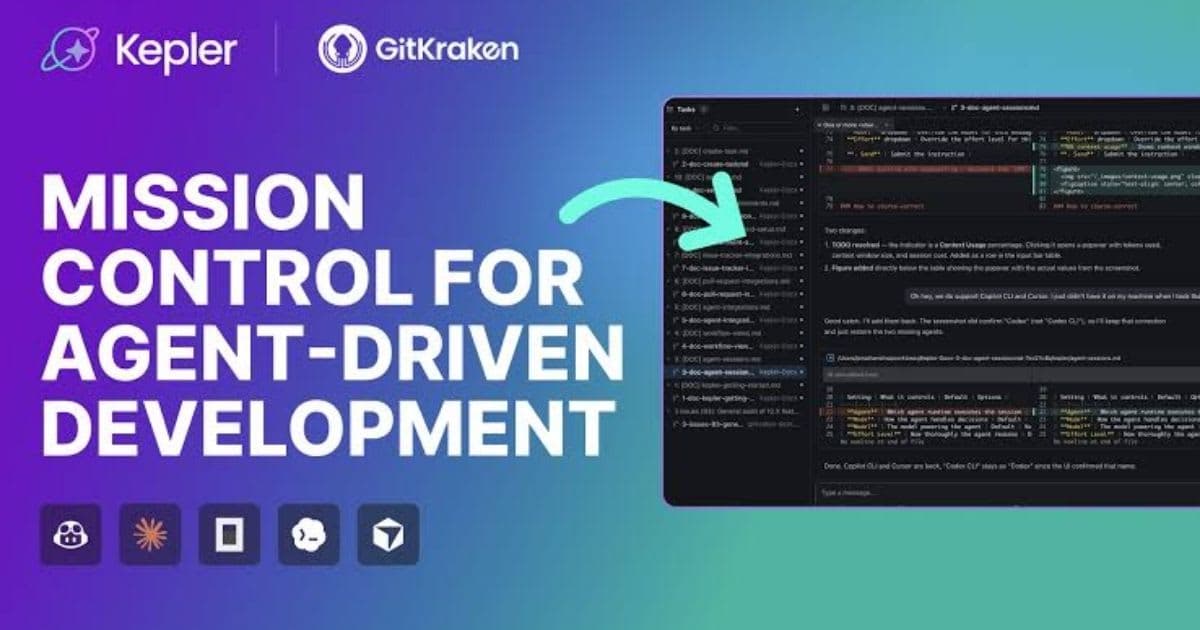
Introduction
Kepler AI coding marks a fundamental shift in
modern software engineering by moving beyond basic autocomplete toward a
full-scale Agentic Development
Environment (ADE). Instead of
wrestling with fragmented terminal windows or isolated editor plugins,
developers utilize a centralized mission control interface to direct and manage
multiple AI coding agents
simultaneously.
The
platform excels at multi-agent
orchestration, allowing engineering teams to delegate complex migrations,
refactoring tasks, and unit test generation without manual friction.
What Is Kepler AI Coding?
Overview and Evolution
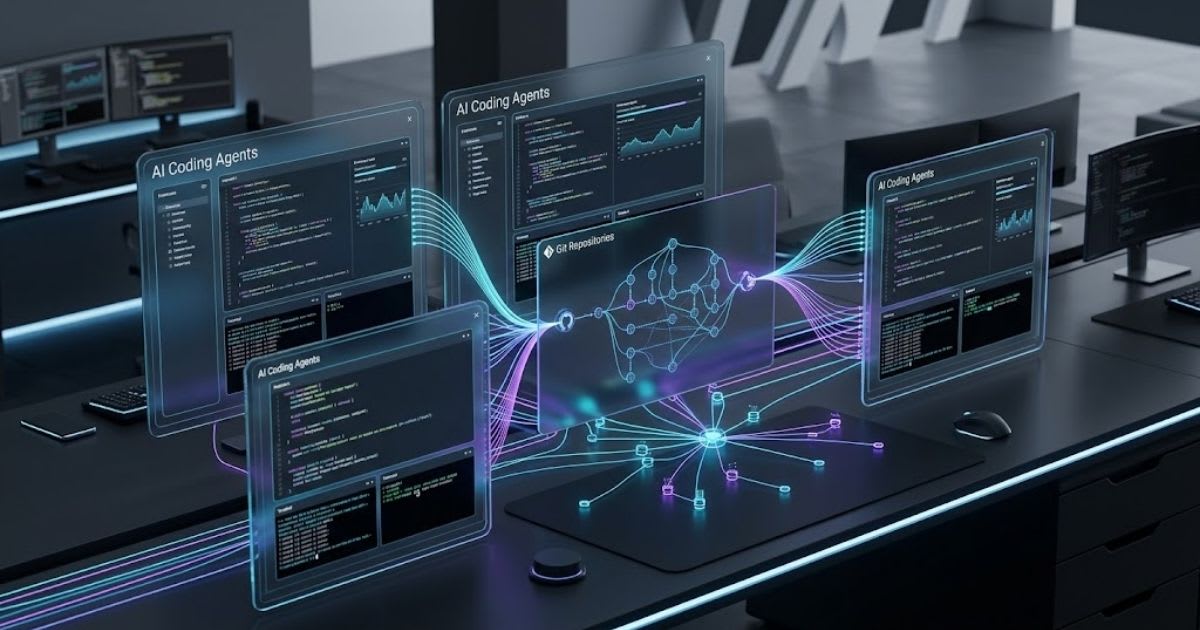
Kepler AI
coding turns messy terminal work into one clear screen. You plan tasks, hand
them to AI agents, and check results fast. This frees your team for design
work, security checks, and big-picture planning. Teams that build microservices
often hit slow, messy delays. Old tools missed key facts about your code and
team habits. OpenAI Kepler solved early data problems, and GitKraken Kepler
built a full code delivery platform on top.
The Shift to
Agentic Development Environments
An agentic
development environment gives you one place to guide AI agents. It treats many
files and many repos as one clean job. Live logs and branch visualizers
let you watch each step live.
The Problem It
Solves: AI Workload Bottlenecks
Running many
agents at once causes messy branch chaos fast. You lose track of which agent
works, tests, or fails. Kepler fixes this with one clear Kanban dashboard
for every task.
Why GitKraken
Built Kepler
GitKraken built this tool to link trackers, code, and AI models.
Talks at events like QCON AI called for one shared agent control surface.
This tool plugs into your current Git setup with no extra hassle.
Core Architecture:
How Kepler AI Coding Works Under the Hood
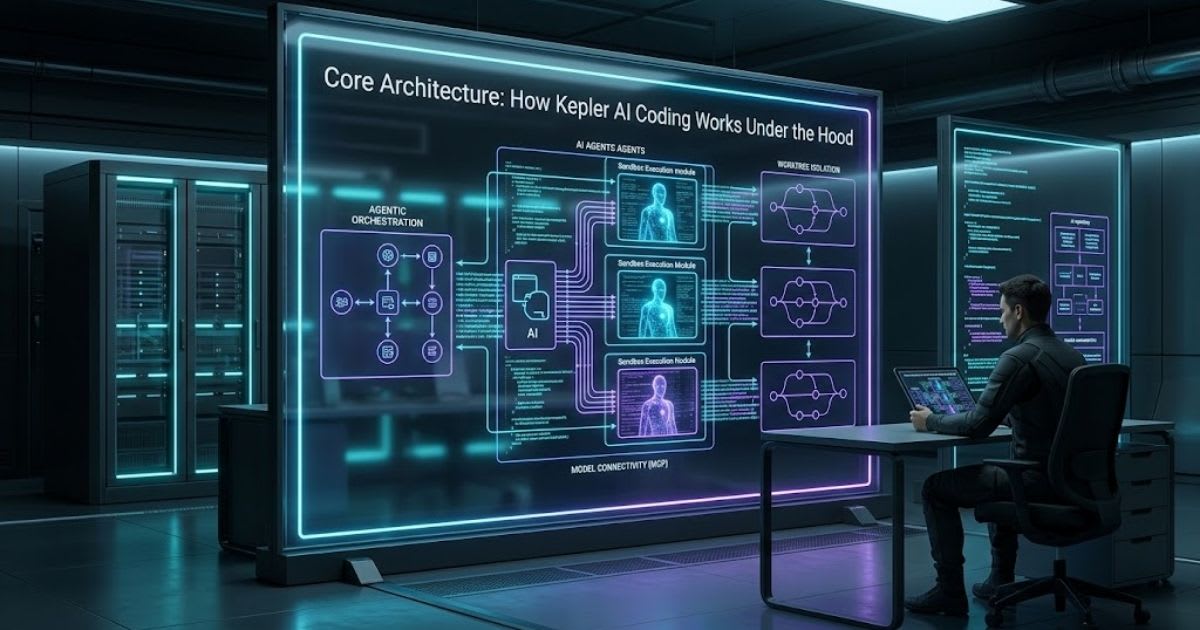
Kepler AI
coding uses an open protocol that talks to many AI models. It follows shared
rules like the Model Control Protocol and Anthropic MCP. You can swap
between GPT-5, Claude Code, and other tools with ease. Each task gets its own
safe space through Git worktree setup. This keeps agents from touching
your live work or edits. The tool also reads your database and code maps for
full context.
|
Layer |
Core Tech |
Benefit |
|
Protocol |
MCP
standard |
One
way to call any AI model |
|
Workspace |
Git
worktrees |
Clean
branches, no mix-ups |
|
Context |
Hybrid
smart search |
A
deep, exact map of your code |
|
Task
Sandbox |
Safe
run space |
Safe
way to run and test code |
Agent Client
Protocol and Multi-Model Connectivity
This protocol
links smoothly with tools like ChatGPT Pro and other agents. It turns your
plain words into real, checked code changes. You can switch models based on
speed, cost, or task size.
Hybrid Search and
Discovery Subagents
Discovery
subagents mix inside search with web search for full context. They use semantic
vector embeddings plus code-aware checks to trace links. This helps agents
learn your app’s shape before writing code.
Worktree Isolation
and Metadata Extraction
Each task
gets its own safe folder across all your repos. The tool reads table names and
setup files for exact limits. This keeps builds and tests safe from your live
branches.
Task Execution and
Workflow Persistence in Kepler AI Coding
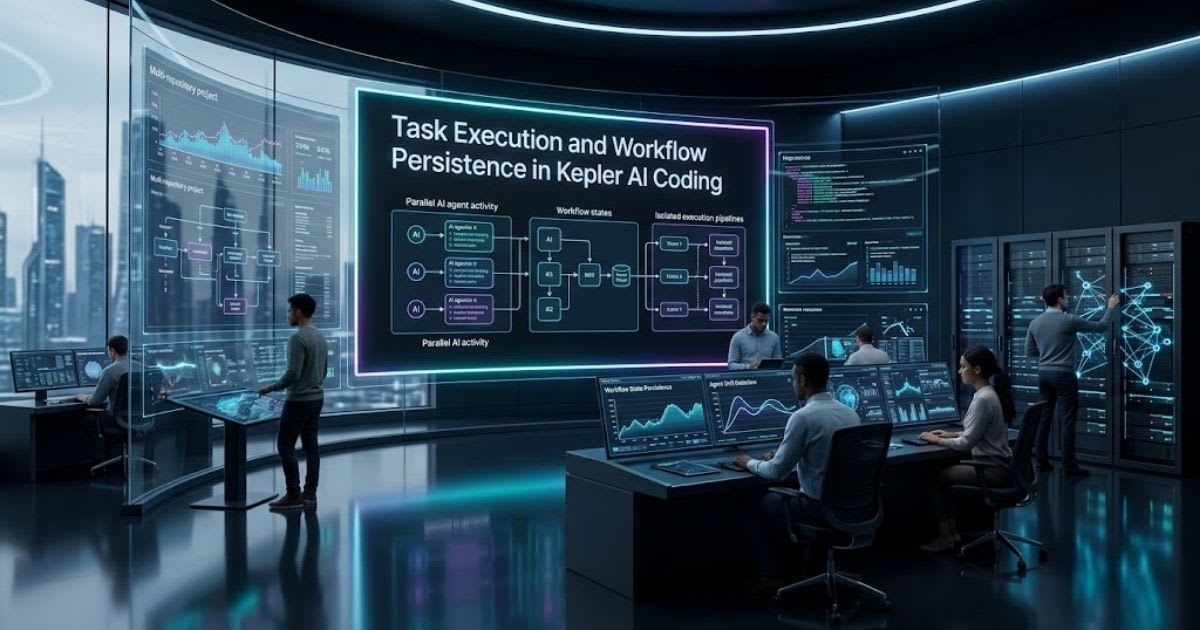
Kepler links
multi-repo updates and feature launches into one clear task. You can join
frontend work, backend work, and database changes as one plan. The tool checks
each step with chain-of-thought reasoning for full safety. Task work
keeps running even after restarts or dropped connections. You can link tasks to
remote SSH or WSL setups for heavy jobs. Built-in scope violation routing
keeps agents locked on the right goal.
"True developer leverage comes from
delegating multi-repository tasks to autonomous agents while maintaining strict
supervisory guardrails and visual verification." — Bonnie Xu, AI
Systems Researcher
+-----------------------------------------------------------------------------+
|
GitKraken Kepler Orchestration |
+-----------------------------------------------------------------------------+
|
+----------------------------+----------------------------+
|
|
v v
+-----------------------------+ +-----------------------------+
| Core Software Services | |
Data Engineering Pipelines |
| *
Microservice Alignment | | * Apache Spark &
Airflow |
| *
Multi-Repo Orchestration| | * Data Warehouse Queries |
| *
Automated Testing Runs | | * SQL Query Generation |
+-----------------------------+ +-----------------------------+
| |
v
v
+-----------------------------------------------------------------------------+
| GitKraken Conflict Resolver &
Auto-Rebasing Branches |
+-----------------------------------------------------------------------------+
|
v
+-----------------------------------------------------------------------------+
|
Clean Mergeable PR Output |
+-----------------------------------------------------------------------------+
Multi-Repo
Orchestration in a Single Task
Big apps
often need changes across many repos at once. Kepler links these jobs into one
task to keep shared context intact. This stops broken links and keeps matched
changes landing together.
Choosing Your
Agent, Execution Mode, and Effort Level
You set how
much freedom each agent gets per task. Use careful, planned steps for risky
changes and free-run mode for small fixes. This helps you manage cost and
control with ease.
Remote
Environments and Task State Persistence
Tasks keep
running well on remote setups using SSH or WSL. Start a job on your desk and
check it later on your phone. Long builds and checks finish safely without
breaks.
Repeatability and
Reliability With Kepler Playbooks

Kepler stays
reliable through reusable guides called Kepler Playbooks. When an agent
fixes a tough bug, that fix becomes a saved playbook. Any teammate can then
reuse that same fix with one click. Trust grows when each workflow has clear
checks before code ships. Human-in-the-loop controls let you read the
plan, edit it, and guide the agent. A memory system saves feedback so old
mistakes do not repeat.
•
Turn strong agent sessions into reusable templates
•
Share work guides across your whole team
•
Force tests and checks before any pull request
•
Store team rules in one shared memory
Playbook Distillation
From Real Sessions
Saving a
session keeps every prompt, check, and command in one file. This turns a single
win into a shared team asset. New team members can reuse it to solve the same
issue fast.
Searching,
Indexing, and Sharing Playbooks
Teams keep a
searchable list of playbooks right inside their repos. You find old fixes
through quick search, not slow manual scripts. This shared list speeds up new
hire training a lot.
How Playbooks
Build Verification Trust
Playbooks set
clear, safe limits your team can trust. Pairing free code writing with tests
and lint checks keeps quality steady. This trust helps teams ship agent code
with less worry.
How to Initiate
and Manage Tasks With Kepler AI Coding
The platform
gives you many ways to start daily work. Type a plain request, pick a Jira or
Linear ticket, or use Slack integration. The tool sets branches, builds
safe spaces, and scans your code at once. Watching many tasks at once stays
simple with a live branch view. Each card shows the branch, changed repos,
status, and merge readiness. This clear view helps you spot stuck tasks fast.
•
Start work from Jira, Linear, or pull requests
•
Track agents by stage: Explore, Build, Review, Done
•
Guide agents mid-task with text, screenshots, or voice
•
Check diffs and stage changes before you commit
Three Practical
Ways to Start a Task
Start fresh,
link a ticket, or follow up from a pull request. The engine reads your goal and
sets branches across repos on its own. This fast start lets you hand off chores
in seconds.
Monitoring the
Mission Control Board
The board
sorts tasks into clear stages you already know well. Live filters show agents
that need help, work, or sit idle. This view stops slowdowns even with many
agents running.
Bridging Kepler
and GitKraken Desktop
The tool
links right to GitKraken Desktop for visual diff checks. You view staged trees,
check commits, and fix conflicts before you publish. This link makes agent work
feel like normal Git work.
Real-World Impact
and Developer Productivity With Kepler AI Coding
This orchestration
layer cuts busywork and lifts team output fast. Handing off small code,
tests, and fixes frees you for big work. Teams get faster sprints and quicker
releases. Data teams gain the same boost from this shared layer. A data team
can send an AI analyst to fix pipeline chores. The tool speeds up data queries
and runs jobs across Spark and Airflow.
•
Speeds up work with background tasks
•
Cuts switching with one shared status view
•
Boosts data work with auto queries
•
Improves output with small, safe updates
Accelerating
Asynchronous Development Cycles
You launch
chores at day’s end and check results the next morning. This cuts wasted wait
time during long builds and tests. Work speeds up since chores run in the
background, not in your way.
Measuring
Engineering Metrics and DORA Impact
Leaders track
clear gains in release speed and fix time. Auto fixes help teams ship small,
safe updates more often. These gains raise DORA metrics while keeping
code safe and clean.
The Transition to
Open Source in Kepler AI Coding
Kepler backs
open rules so your team keeps full control. Open builds stop lock-in and boost
shared, community-driven growth. You can add plugins, lint rules, and your own
tools with ease. Security teams can run agent nodes in locked, safe spaces.
Built-in log deduplication keeps audit trails clean and easy to read.
This setup lets big firms use AI while staying fully compliant.
•
Open rules work across many models and tools
•
Self-hosted nodes run in your own cloud
•
Tight key controls guard your API keys
•
Clean logs stop code leaks during work
Open Standards in
Agent Tooling
Shared rules let agents, editors,
and CI tools talk with ease. Open specs make it simple to add new AI models
fast. This open build keeps your stack ready for what comes next.
Community
Extensions and Self-Hosted Agent Nodes
Teams run
agent nodes on their own cloud or local machine. You build custom subagents
that fit your build tools and APIs. This lets big firms scale AI while staying
within their own rules.
The Future Roadmap
of Kepler AI Coding
Kepler’s plan
targets deeper links, less delay, and steady upkeep. Soon, Code Flow will watch
branch health before a pull request opens. A new Evaluation Grader will
score code for safety and clarity. New updates will add data checks and smart
conflict alerts. Tools like Commit Composer and the Conflict Resolver will
build clean, mergeable code. These steps make AI-driven work more solid across
every team.
|
Phase |
Focus |
Outcome |
|
1:
Checks |
Evaluation
Grader |
Clear
code scores before merge |
|
2:
Sync |
Auto-rebase
and Conflict Fix |
Smooth
merges, no friction |
|
3:
Smarts |
Business
fit checks |
Code
work matched to your goals |
Rebuilding the
Core on Advanced SDKs
A faster core
speeds up talk between agents and local tools. This cuts delay during big repo
changes. The new pipeline handles deep context for quicker, more exact results.
Automating
Proactive Insights and Auto-Cleanup
New updates
will spot old code, unused folders, and risks fast. The tool will suggest fixes
and clean up old worktrees post-merge. This keeps your codebase tidy with no
manual work needed.
Frequently asked questions
What is Kepler AI?+
Kepler AI refers to agentic development platforms and internal AI systems (such as GitKraken Kepler or OpenAI's internal Kepler tool) designed to orchestrate autonomous AI coding agents, synthesize internal knowledge, and automate multi-repository development workflows.
What is Kepler in Kubernetes?+
Kepler (Kubernetes-based Efficient Power Level Exporter) is a Cloud Native Computing Foundation (CNCF) sandbox project that uses eBPF probes to monitor energy consumption and export power-usage metrics for containerized workloads across Kubernetes clusters.
Is Kepler open source?+
Yes, Kepler projects generally embrace open-source models; Kubernetes Kepler is a community-driven CNCF open-source project under the Apache 2.0 license, while developer agent platforms like GitKraken Kepler utilize open standards and protocols (such as MCP) to support community extensions.
What company is Kepler?+
"Kepler" is not a single company; it represents tools created by multiple organizations, including GitKraken's Agentic Development Environment, Kepler Communications (a satellite telecommunications company), and Kepler Interactive (a video game publisher).
What is Kepler software?+
Depending on context, Kepler software refers either to GitKraken’s Agentic Development Environment for orchestrating parallel AI coding tasks, the CNCF power-monitoring tool for cloud infrastructure, or Uber’s kepler.gl, an open-source geospatial data visualization engine.
What is Kepler data?+
Kepler data typically refers to public astronomical datasets collected by NASA’s Kepler Space Telescope used to detect exoplanets, or structured metadata, table schemas, and internal logs ingested by AI data-synthesis platforms to answer complex engineering queries.
Related articles
 AI Coding Tools
Best AI coding assistants for beginners
Learning to code with AI? These assistants teach instead of just autocompleting.
 AI Coding Tools
DeepSeek Harness: How Its Plugin-Based AI Agent Works
DeepSeek Harness explained: what it is, how it works, and why it matters. Learn the basics in this simple, clear guide."
 AI Coding Tools
How GitHub AI Code Review Works: Complete 2026 Developer Guide
Master GitHub AI code review in 2026. Automate pull request triage, detect critical bugs instantly, and slash review turnaround.
New AI tool reviews, in your inbox.
Get new reviews and comparisons in your inbox. No spam, unsubscribe anytime.
Comments (0)
Be the first to comment.