Ideogram V4 vs Nano Banana 2 : Which AI Image Tool Renders Text Better?
Ideogram 4.0 vs Nano Banana 2: Compare text rendering, image quality, editing, pricing, and find the best AI image model.
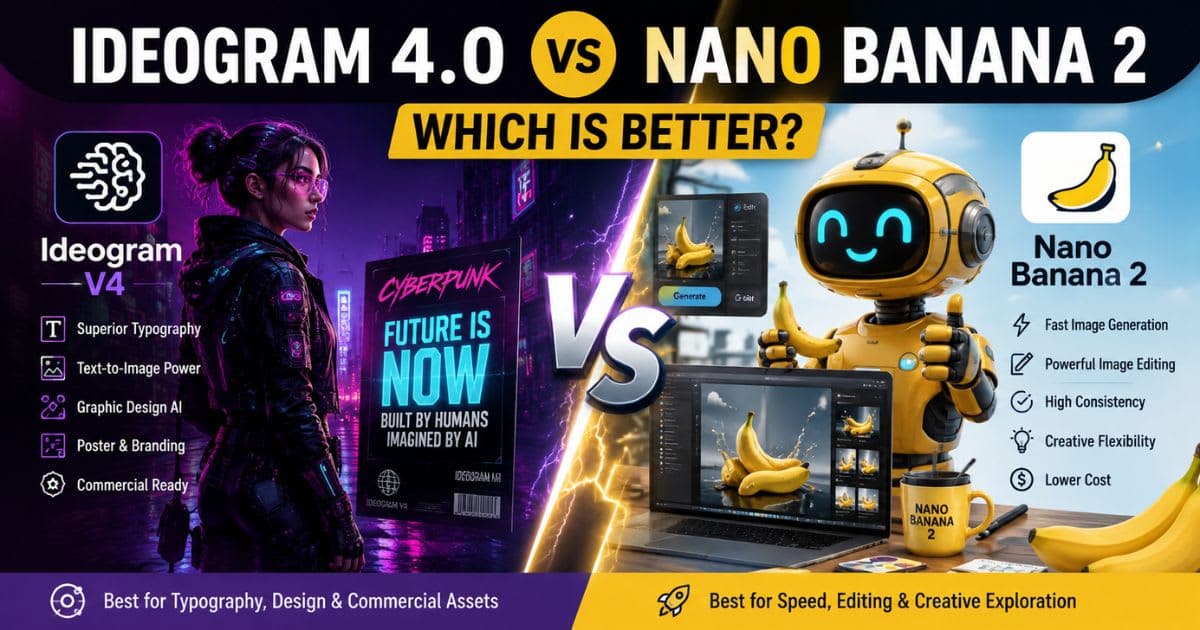
Introduction:
Ideogram V4
vs Nano Banana 2 comes down to one core question: which model handles text
better? Both tools deliver strong AI image generation results,
yet they take different creative paths. Ideogram V4 builds its entire identity
around precise typography control, making it the go-to choice
for posters, packaging, and branding.
Nano Banana
2 instead leans on Google's flexible Gemini ecosystem, favoring
speed and conversational editing over strict layout rules. For
U.S. creators and marketers, this difference shapes real production decisions
daily. This guide compares text rendering, design control,
editing power, and pricing directly. You will finish knowing exactly which
model fits your workflow.
Ideogram V4 vs Nano Banana 2 at a Glance
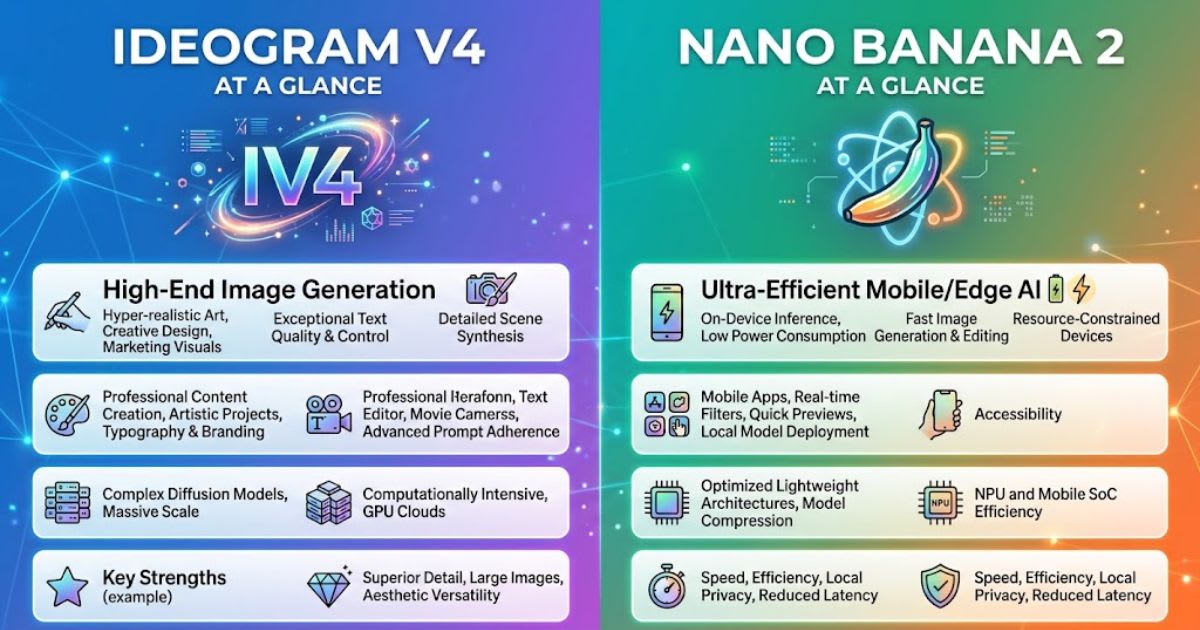
Ideogram
V4 vs Nano Banana 2 splits cleanly along one line: precision typography versus
fast, general-purpose creation. Ideogram V4 targets design-focused workflows
where every letter matters. Nano Banana 2 targets speed and conversational
editing through Google's infrastructure instead. Pick based on which
priority matches your actual output.
|
Category |
Ideogram V4 |
Nano Banana 2 |
|
Typography |
Excellent |
Strong |
|
Text accuracy |
Strong documented evidence |
Improving |
|
Layout control |
Structured and design-focused |
Conversational |
|
Editing |
Strong |
Strong |
|
Image quality |
High |
High |
|
Resolution options |
Up to 2048px native output |
0.5K, 1K, 2K, and 4K |
|
API |
Ideogram API |
Gemini API |
|
Open weights |
Yes |
No |
|
Best for |
Typography and design |
Fast general-purpose creation |
For
text-heavy American marketing work, the advantage leans toward Ideogram
clearly. Published evidence includes a 0.97 X-Omni OCR accuracy score
and a blind typography test where designers preferred it. That documented gap
shapes most of this Ideogram V4 vs Nano Banana 2 comparison.
Ideogram 4.0 vs Nano Banana 2: Quick Text Rendering
Comparison
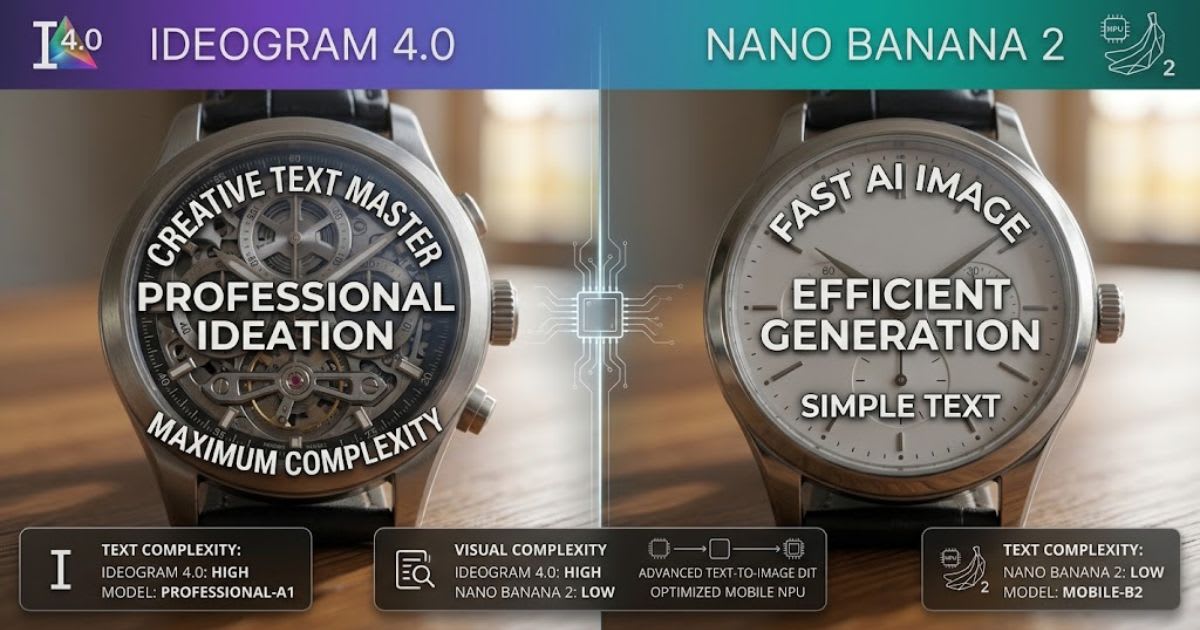
Ideogram
4.0 vs Nano Banana 2 rendering results stay fairly consistent across
independent tests. Ideogram V4 shows stronger documented typography
performance across every published benchmark. Nano Banana 2 still produces
impressive text rendering and improved international support through
Gemini 3.1 Flash Image. Neither model fails at text, but one carries stronger
proof.
Which Model Renders Text Better?
Ideogram V4 takes the clear lead if your top priority is typography. Its
0.97 X-Omni English OCR accuracy result gives the model unusually strong
supporting evidence. Nano Banana 2 performs well too, but comparable
independent benchmark evidence stays thinner for now.
What Are Ideogram V4 and Nano Banana 2?
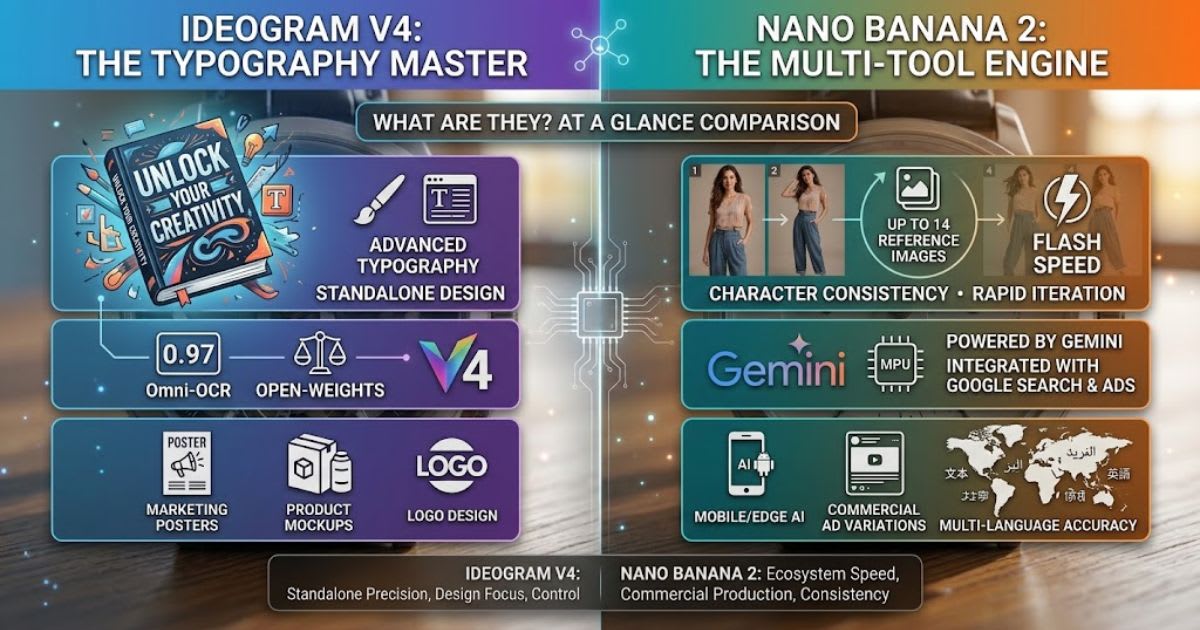
Ideogram 4.0 and Nano Banana 2 start with understanding what each model
actually is. Ideogram AI built Ideogram V4 around professional visual creation using a 9.3B-parameter diffusion transformer. It also supports
structured prompting that gives users more control over exact layout regions inside a design. Google Gemini
powers Nano Banana 2 through Gemini 3.1 Flash Image Preview instead. Google
describes it as a high-efficiency image
model built for speed and volume. Current documentation highlights
improved image quality, consistency, and
aspect-ratio adherence across outputs.
What Is Ideogram V4?
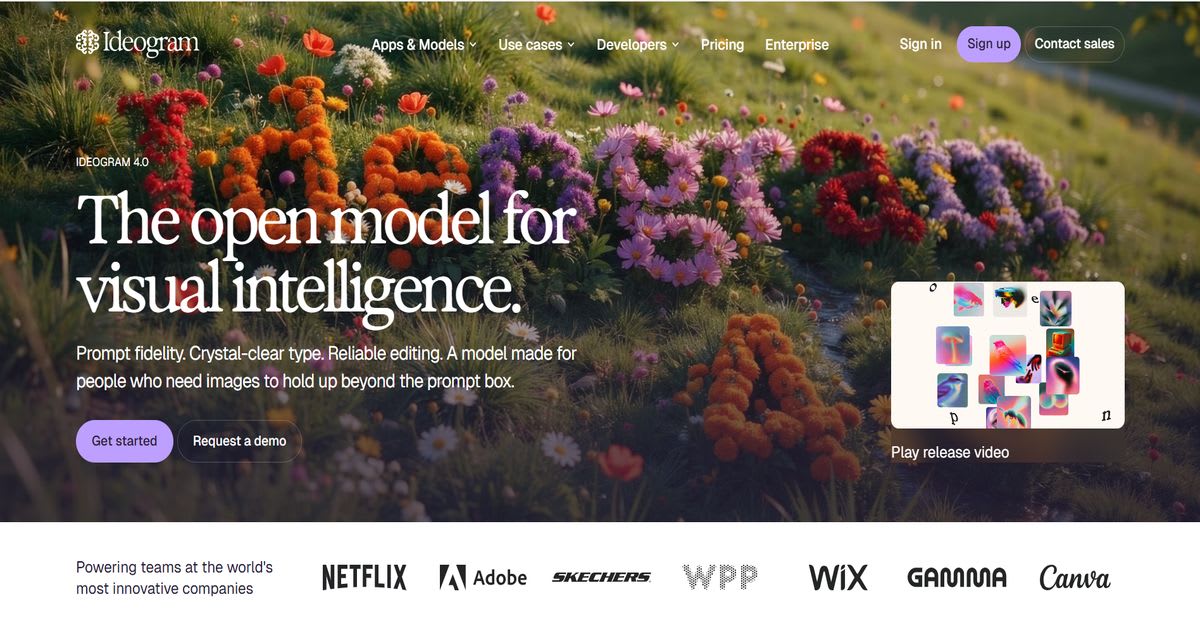
Ideogram
V4 is a typography-focused model built for demanding visual layouts
today. It supports plain prompts and structured JSON workflows for developers
who need precision. Native resolution reaches 2048 pixels, and published open
weights exist through Hugging Face for eligible commercial use.
What Is Nano Banana 2?
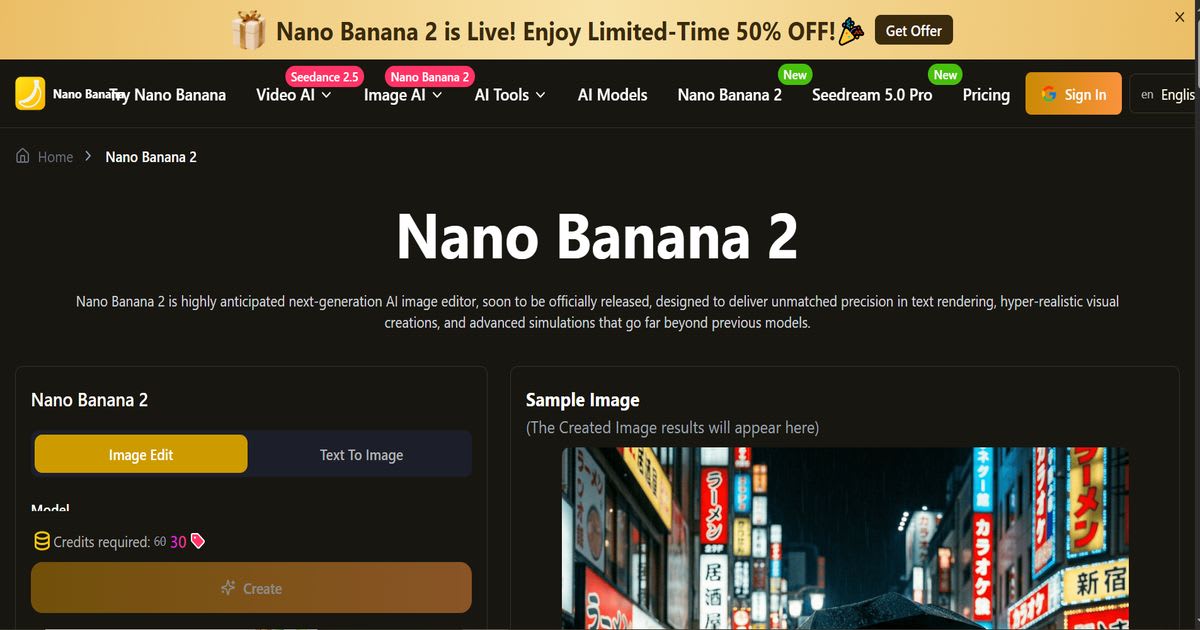
Nano
Banana 2 is the product name tied to Gemini 3.1 Flash Image Preview directly.
Google positions it as a fast image generation system built for everyday
creators. It supports text and image inputs, conversational editing, and
multiple resolution outputs.
Why Typography Matters in AI-Generated Images
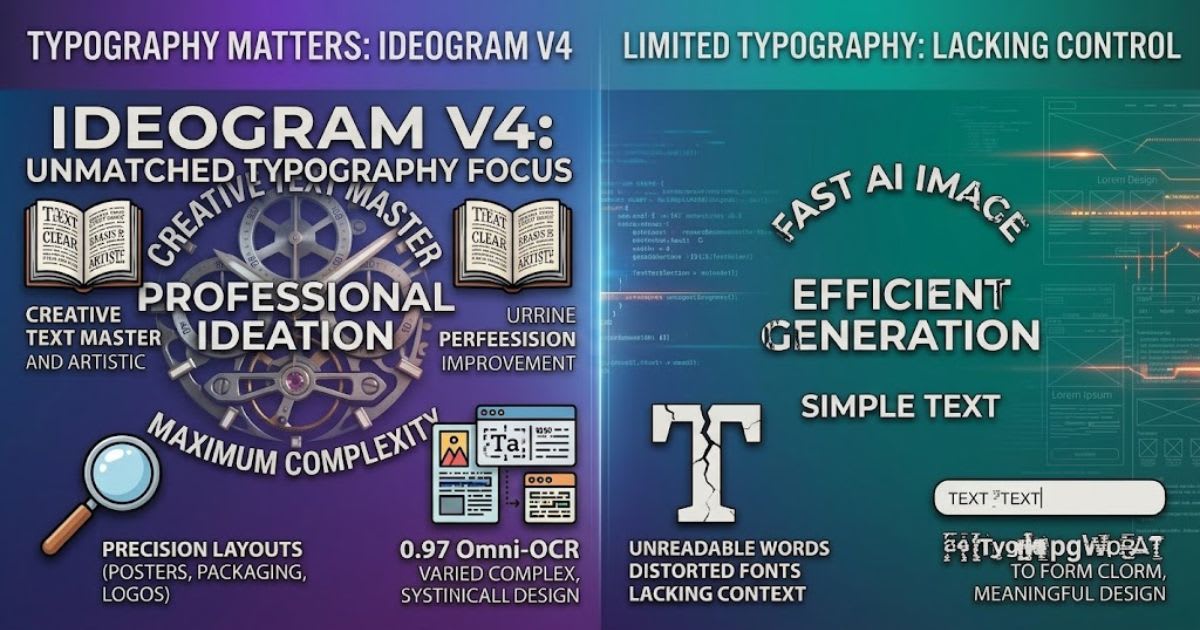
Typography decides whether a
finished image feels genuinely usable or just decorative. Readable text
rendering matters for ads, packaging, menus, thumbnails, signs, and
presentations every single day. A realistic background cannot rescue a
misspelled brand name at all. That single detail explains why the Ideogram V4
vs Nano Banana 2 debate keeps circling back to text.
Ideogram 4.0 vs Nano Banana 2: Feature-by-Feature
Comparison
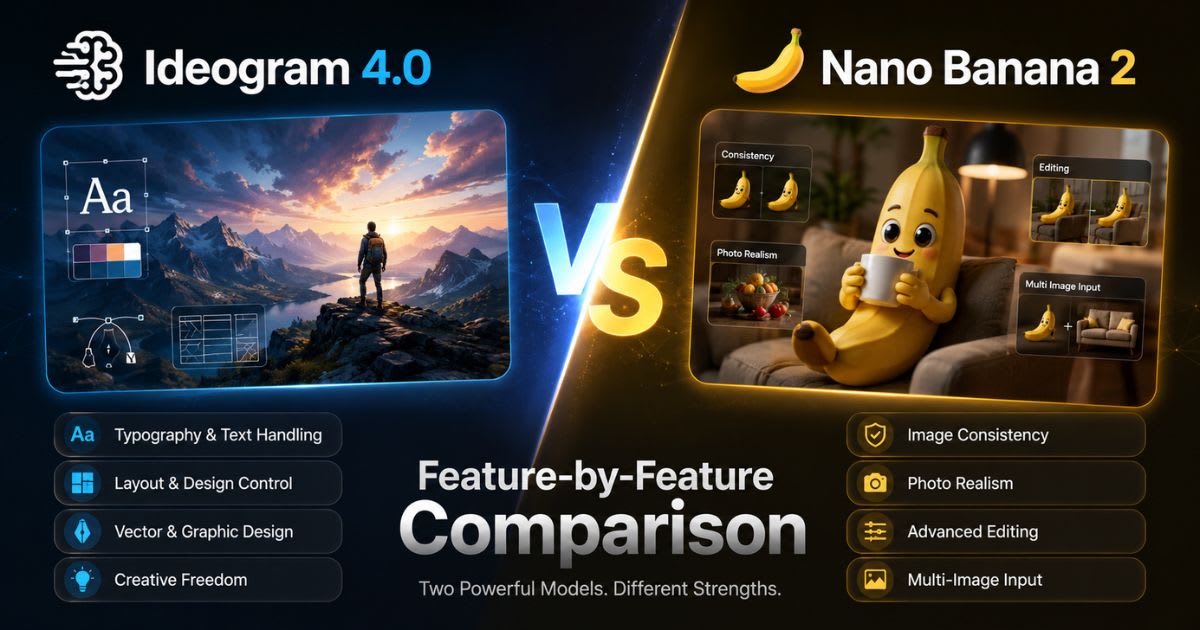
Ideogram 4.0 vs Nano Banana 2 becomes easier to understand when you look
at how each model handles creative control. Ideogram V4 treats text as a core design element, making it a strong
choice for posters, graphics, and structured layouts. Nano Banana 2 takes a
broader approach, focusing on flexibility rather than strict layout control. Both models give users
plenty of creative freedom, but their workflows are quite different. Ideogram
offers a more structured design workflow,
while Nano Banana 2 relies on natural, conversational prompting through Gemini.
This makes Ideogram a better fit for repeatable
layouts, while Nano Banana 2 works well for open-ended exploration and
creative ideas.
Text Rendering and Spelling Accuracy
Ideogram V4 has the stronger documented case for the best model with readable text. Its 0.97 OCR result and designer study provide measurable, real-world support. Nano Banana 2 also performs well, but its public spelling accuracy evidence remains less extensive right now.
Typography, Fonts, and Visual Style
Ideogram
works particularly well when typography forms part of the composition itself.
Think magazine covers, movie posters, packaging, and promotional banners
needing clear structure. Nano Banana 2 creates stylish lettering too, though
Ideogram suits text hierarchy better across complex layouts.
Layout and Design Control
Ideogram
supports structured prompting through a JSON specification with bounding boxes
and hex colors. That approach gives developers finer prompt control over
exact content placement inside a canvas. It resembles a true design
specification more than a simple conversational request.
Prompt Understanding and Creative Control
Nano
Banana 2 benefits from the broader reasoning environment surrounding the Gemini
ecosystem. That makes conversational refinement attractive for iterative
creative work across many sessions. Ideogram instead offers a more explicit,
design-oriented workflow built for structured output.
Image Editing and Text Changes
Nano
Banana 2 deserves serious attention if you need reliable image editing
across a session. Google describes it as supporting conversational editing that
keeps context between prompts. Ideogram also supports editing, though its real
strength stays design-oriented control over layout.
Resolution and Final Asset Quality
Resolution affects final
usability once typography must survive close cropping or printing. Google lists
0.5K, 1K, 2K, and 4K resolution options for Gemini 3.1 Flash Image.
Ideogram V4 provides native output up to 2048 pixels, keeping small text sharp.
Ideogram 4.0 and Nano Banana 2 for Real-World Use
Cases
The
real question inside Ideogram V4 and Nano Banana 2 is not overall superiority.
Instead, ask which model fits your specific production task best today. A
billboard designer needs different strengths than a creator producing quick
social concepts. For U.S. businesses, the strongest workflows often separate
exploration from final production entirely. You might use Nano Banana 2 for
broad creative workflow exploration across many concepts. Then switch to
Ideogram for typography control once the concept gets locked in.
Best for Posters and Event Graphics
Ideogram is a strong
choice for poster generation needing reliable, structured layout. Event
names, dates, venues, and headlines need dependable placement throughout the
design. Its design-first approach suits posters where typography occupies
significant visual space.
Best for Logos and Product Packaging
Ideogram has an obvious
advantage for logo generation when readable lettering truly matters most.
Packaging similarly needs accurate product names and clear supporting text
elements throughout. Regulated packaging should still receive careful human
review before any public release.
Best for Social Media and Sci-Fi Designs
Both
models create useful concepts for marketing graphics, depending on your actual
goal. Nano Banana 2 helps explore variations quickly across many visual styles.
Ideogram becomes stronger once futuristic signs or promotional copy must stay
readable.
Ideogram 4.0 vs Nano Banana 2: Benchmark and Image
Tests
A
useful benchmark section separates measured results from subjective visual
impressions. Ideogram V4 has unusually strong published typography
performance evidence across multiple independent tests. Research reports a
0.97 X-Omni OCR accuracy score and 0.69 mIoU on 7Bench. The ContraLabs
typography evaluation used ten professional designers reviewing both models
directly. Ideogram V4 received 47.9% of first-place selections, versus 30.0%
for Nano Banana 2. That gap gives the Ideogram V4 vs Nano Banana 2 comparison
real, human-backed weight.
|
Benchmark |
Ideogram V4 |
Nano Banana 2 |
|
X-Omni English OCR |
0.97 |
Not confirmed |
|
ContraLabs first-place rate |
47.9% |
30.0% |
|
Real-client-work rating |
3.55/5 |
2.84/5 |
|
7Bench layout score |
0.69 mIoU |
Not confirmed |
How to Compare Ideogram V4 and Nano Banana 2 on Text
A
fair test uses matching prompts and identical text requirements across both
models. Testing starts with short words, then increases complexity through
headlines and full labels. This approach exposes failure modes without
confusing image style with pure text accuracy.
What Existing Benchmark Evidence Shows
The
strongest current evidence favors Ideogram for typography across every
published test available. The X-Omni OCR result reaches 0.97, while the
designer study gave a 47.9% first-place rate. The same study rated real client
work 3.55 out of 5 versus 2.84.
Ideogram 4.0 and Nano Banana 2: Pricing,
Availability, Licensing, and Commercial Use
Pricing
changes the practical answer for many teams weighing Ideogram V4 and Nano Banana
2. Ideogram publishes clear per-image API pricing at $0.03, $0.06, and
$0.10. Google now publishes Nano Banana 2 output pricing through Gemini
directly, based on resolution. For U.S. creators, commercial licensing
deserves equal attention alongside raw generation cost. A fair comparison
should distinguish hosted commercial access from downloadable model weights.
Ideogram offers different paths, including research access and paid
self-hosting for larger teams.
Ideogram V4 and Nano Banana 2 Pricing
The Ideogram API lists $0.03 per image for Turbo, $0.06 for Default, and $0.10 for Quality. Google's Gemini API pricing lists Nano Banana 2 at roughly $0.067 for a 1K image, $0.101 for 2K, and $0.151 for 4K.
Open Weights vs Closed Model
The
open weights versus closed model distinction matters for infrastructure
planning today. Ideogram publishes quantized weights, while Nano Banana 2
remains fully managed through Google's servers. Licensing still determines
whether commercial self-hosting stays permitted for your team.
Commercial Usage and Licensing
A
generator built for commercial use needs genuinely clear usage rights upfront.
Ideogram's hosted API supports commercial use, while its public weights carry
separate licensing terms. Commercial self-hosting specifically requires
the applicable paid license before production use.
Ideogram 4.0 vs Nano Banana 2: Pros and Cons
The
strengths become clearer once you stop treating every image task equally.
Ideogram V4 is strongest where typography and layout genuinely drive the final
result. Nano Banana 2 is attractive where flexible generation and conversational
editing matter more than precision.
Ideogram V4 Pros and Cons
Ideogram
V4 combines strong generation quality with typography-focused capabilities
throughout its entire workflow.
● Strong OCR
and designer-tested text accuracy
● Structured
JSON prompting for precise layout control
● Published open
weights through Hugging Face
● Licensing
complexity for commercial self-hosting remains the main drawback
Nano Banana 2 Pros and Cons
Nano
Banana 2 offers strong editing capabilities, conversational workflows, and
multiple resolution options for
creators.
● Fast,
flexible AI image generation
through the Gemini ecosystem
● Reliable conversational editing across a full
session
● Up to 4K
output for high-resolution final assets
● No public
model weights available for self-hosting
Ideogram V4 vs Nano Banana 2: Which One Should You
Choose?
Choose
based on the finished asset rather than a model's general popularity alone. If
you need exact words inside a poster or package, Ideogram V4 is safer. Its typography
performance evidence is currently stronger than Nano Banana 2's public
record. If you need broad experimentation or Google ecosystem integration, Nano
Banana 2 deserves real attention. It is not a weak typography model at all.
Instead, it represents a broader creative workflow philosophy built for
volume and speed.
Choose Ideogram V4 If Typography Is Your Priority
Ideogram V4 is the clear recommendation for the strongest generator with
accurate text. It suits posters, packaging, branding, advertising, and
editorial layouts where wrong wording creates real business risk.
Choose Nano Banana 2 If You Need General-Purpose
Generation
Nano Banana 2 makes sense for creators wanting flexible generation with conversational editing built in. Google positions it for high-volume use across many concepts, fitting teams that generate many ideas rather than one perfect final asset.
Conclusion
Ideogram V4 vs Nano Banana 2 ultimately comes down to your final asset, not general popularity. Choose Ideogram V4 when typography and precise text rendering decide the outcome. Choose Nano Banana 2 when speed, editing, and broad creative workflow flexibility matter more.
Frequently asked questions
Is there a better model than Nano Banana?+
Yes. The better choice depends on your needs. For typography, posters, and text-heavy designs, Ideogram V4 can be a stronger option than Nano Banana.
Is Nano Banana better than Nano Banana 2?+
Nano Banana 2 is the newer generation and generally offers stronger image quality, editing, and consistency. For most users, Nano Banana 2 is the better choice.
Is Ideogram V4 better than Nano Banana 2?+
For typography and text-heavy designs, yes. Ideogram V4 has stronger documented text-rendering performance, while Nano Banana 2 is more versatile for general image generation and editing.
Which version of Nano Banana is the best?+
Nano Banana 2 is the best choice if you want the latest version. It offers improved image generation, editing, consistency, and text-rendering capabilities.
Which AI art generator is best?+
There is no single winner for every task. Ideogram V4 is excellent for typography and graphic design, while Nano Banana 2 is strong for general-purpose image creation and editing.
Is Nano Banana 2 better than ChatGPT?+
They serve different purposes. Nano Banana 2 focuses on image generation and editing, while ChatGPT is better suited to conversational assistance, writing, reasoning, and broader creative workflows.
Related articles
 AI Image Tools
Free AI T-Shirt Design Generator: Instant Mockups(2026)
Try a free AI t-shirt design generator to create realistic apparel mockups in seconds, with no design skills or studio needed.
 AI Image Tools
5+ Negative Prompts For Images That Actually Work (2026)
Discover 150+ negative prompts AI images creators use to fix hands, skin, and lighting for real, camera-like photo results.
 AI Image Tools
AI Image Generator Pricing (2026): Every Tool Compared
AI image generator pricing compared: real monthly costs, free tiers, hidden fees, and how to cut your bill in 2026.
New AI tool reviews, in your inbox.
Get new reviews and comparisons in your inbox. No spam, unsubscribe anytime.
Comments (0)
Be the first to comment.