AI and Blockchain for Business Automation: A Complete Guide
AI and Blockchain for Business Automation: see how they pair to build faster, safer, more trusted workflows for your firm today.
Introduction
AI and blockchain for business automation is one of the biggest
shifts in tech right now. AI makes smart calls fast. Blockchain keeps records
safe and open. Together, they build automation that firms can trust.
This guide breaks down how these two tools work as a team. You will learn
why more firms pair them. You will also see where this mix helps most. We keep
it simple, with no heavy tech words.
What Is AI and Blockchain for Business Automation?
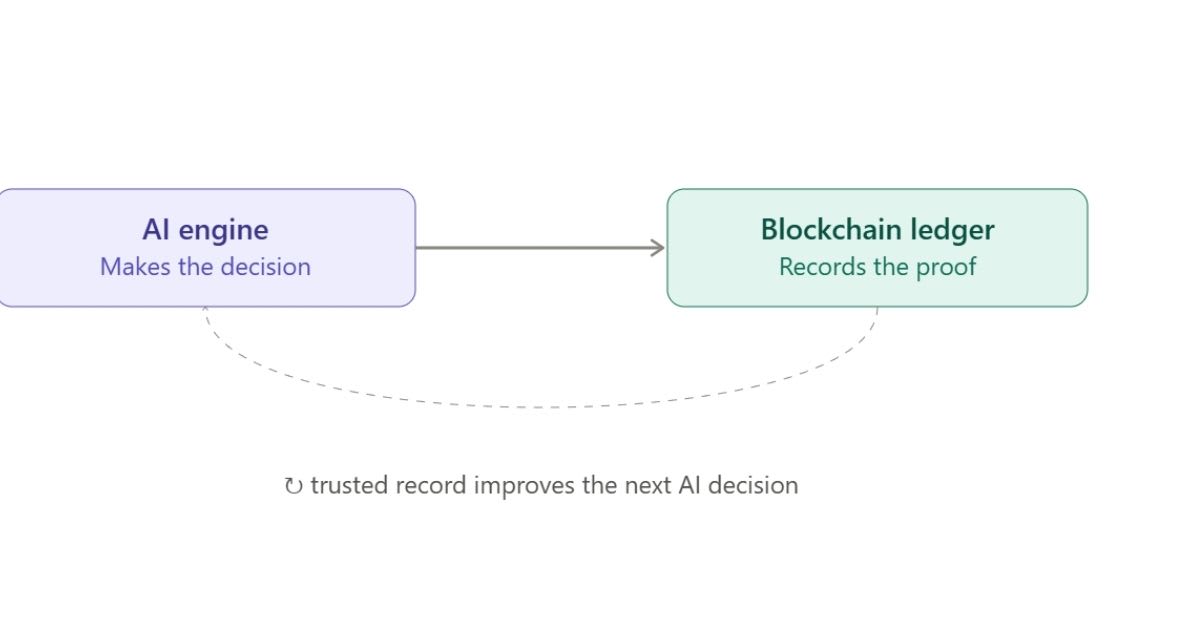
AI and blockchain for business automation means using AI to make
smart calls, backed by blockchain's safe, shared records. AI does the thinking.
Blockchain gives proof that each step really happened. Think of it this way. AI
picks what should happen next in a task. Blockchain locks in a fixed, checkable
record that it did happen, and happened the right way.
Why Pair These Two Tools?
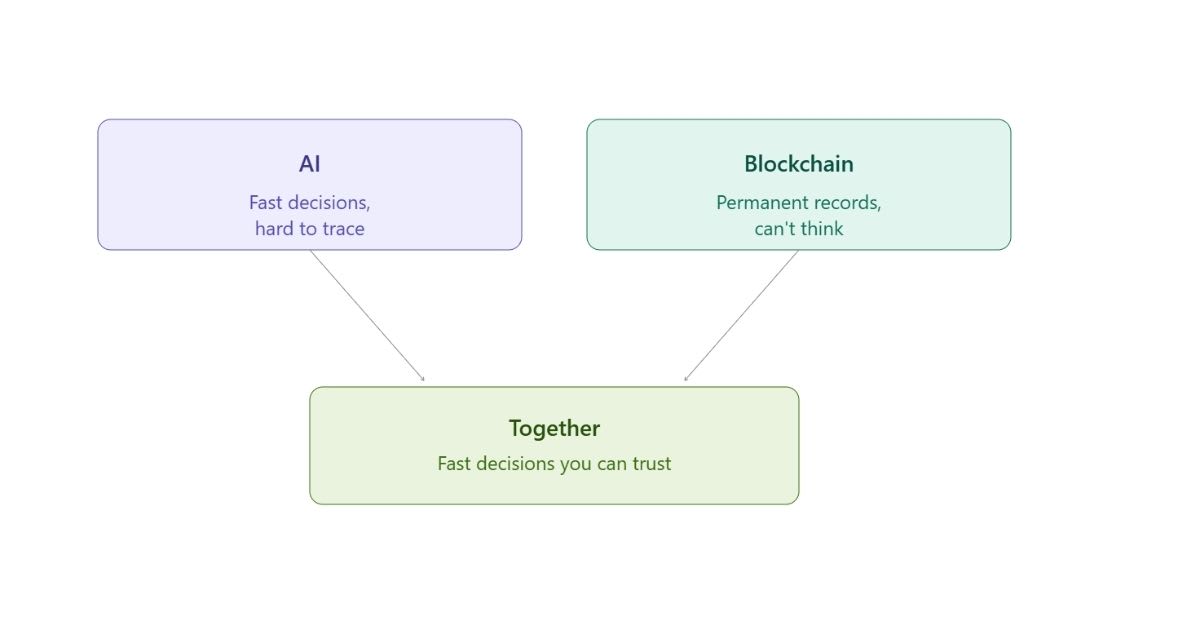
AI alone can make fast calls. But those calls can be hard to trace back.
Blockchain alone keeps great records. But it does not think or decide on its
own. Together, they cover each other's gaps.
How AI Makes Blockchain Smarter
AI needs clean, trusted data to work well. Blockchain gives AI a safe,
shared spot to store and check that data. This cuts the risk of bad or biased
facts slipping through. Many teams now look at how AI and blockchain work as a
pair. This helps boost automation, guard against cyber risk, sharpen guesses,
and back choices with no single weak point.
Cleaner Data for Smarter Tools
An AI tool is only as good as the data behind it. A blockchain-backed
data source stays checked and hard to fake. This means fewer bad facts feed
into your AI's choices.
How Blockchain Makes AI Work Safer
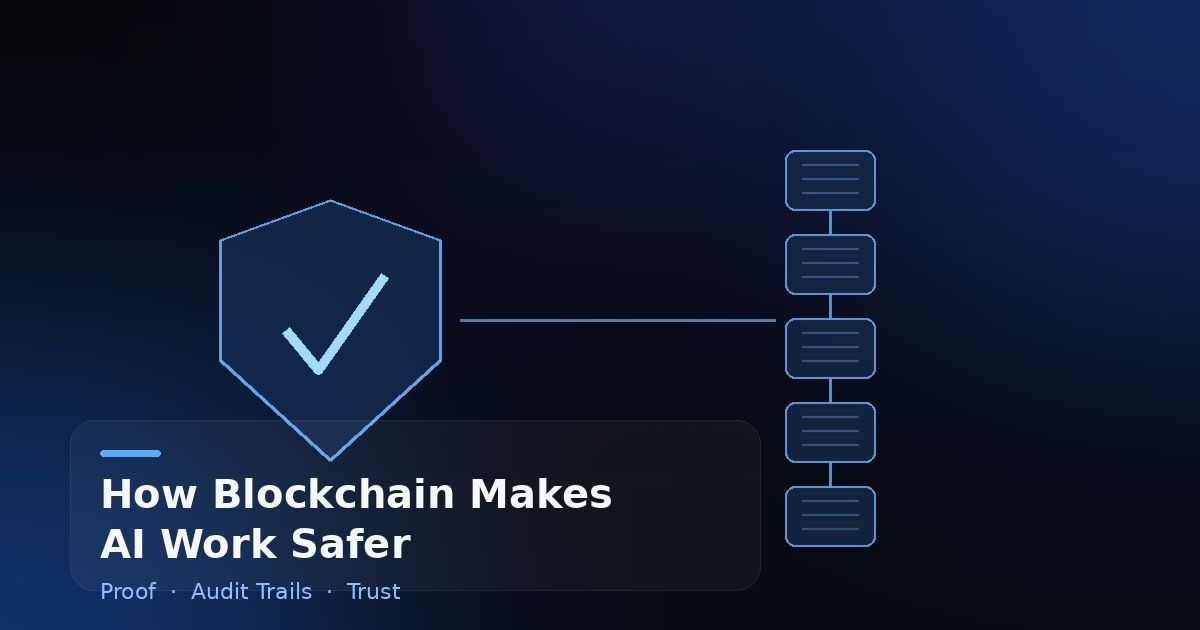
Blockchain adds a layer of proof to AI-driven work. When an AI agent
takes a step, like clearing a payment or fixing a record, blockchain logs it
for good. This is called a fixed audit trail. This counts most in fields
with strict rules. If an AI makes a slip, teams can trace what happened and
when, using a record no one can quietly change later.
Building Trust in Auto Choices
Firms hold back from full automation on big choices with no way to check
them later. A shared, locked record gives leaders the trust to let AI handle
more daily work on its own.
Real Ways Teams Use This Pairing
AI and blockchain for business automation already shows up in real
work today. These are not far-off ideas. Firms use this pair right now to save
time and cut risk.
Here are the most common ways teams use this pair:
●Smart contracts that fire on their own once AI checks a
condition
● Fraud checks that use AI to flag risk, then log the
call on-chain
●Supply tools that use AI to guess delays and blockchain
to lock shipment facts
●ID checks that pair AI pattern-checks with
blockchain-backed ID records
● Rule checks that log every AI call for a later audit
AI and Blockchain in Supply Chains
Supply chains have many partners and non-stop data flow. AI can guess
delays, spot risk, and flag odd patterns fast, across huge piles of shipment
data. Blockchain then locks in each step as a fixed, shared record. Every
partner sees the same facts. This cuts fights and builds real trust across the
whole chain.
Why This Pair Fits So Well Here
A supply chain moves too fast for manual checks alone. AI does the fast
thinking part. Blockchain makes sure every partner trusts the same shared story
of events.
AI and Blockchain in Banking and Finance
Banks and fintech firms already lean on AI for fraud checks and risk scores. Blockchain adds a checked record layer. Flagged deals now come with clear, checkable proof behind them. This pair helps firms move faster on sign-offs. It still meets strict audit and rule needs that banking work demands each day.
Faster Sign-Offs With Less Risk
AI can clear routine deals in seconds. Blockchain logs each sign-off for
good. This speeds up daily work, but does not lose the paper trail rule-makers
want to see.
AI and Blockchain in Health Care
Health data needs both smart handling and strict privacy. AI can help sort, flag, and route patient facts fast. Blockchain then locks who saw that data, and when. This pair helps clinics meet strict rule needs. It still lets them use AI to speed up daily desk work and care choices.
Gains From Combining AI and Blockchain
Pairing these two tools brings real, useful gains for growing firms. Each
one fills a gap the other one leaves open.
●
Faster calls, backed by a record you can actually trust
●
Fewer fights, since all partners see the same shared
facts
●
Stronger fraud checks, with a clear trail behind each
flag
●
Better rule support, since each step gets logged on its
own
●
Less manual work, since routine checks run with no
human step
These gains add up fast for firms that handle large volumes of daily
deals or data.
Risks and Limits to Watch For
No pair works well from day one with no planning. Blockchain systems can
run slower than a normal database. This matters if your AI needs a fast answer
right away. Teams also need real tech skill to link the two tools well. A
rushed setup can add more manual work, not less. Careful planning counts more
here than in most tech projects.
Common Questions About This Approach
Here are quick, clear answers to
the questions business leads ask most.
Do I Need Both AI and Blockchain to Automate My
Firm?
No, not always. Many firms run well on AI alone. Blockchain adds real
value mainly when trust, proof, or shared records across partners matter most
to your case.
Is This Pairing Only for Big Firms?
No. Small firms use this pair too. Many start with one small case, like
supply tracking or one rule check, before they scale it up further.
How Do I Start Testing This for My Firm?
Start with one clear problem, like slow fraud checks or unclear supply
facts. Test AI and blockchain on that one case first, before you roll it out
more widely.
Does Blockchain Slow Down AI Calls?
It can add a small delay next to a normal database. Most teams fix this
by letting AI make the fast call first, then logging it on-chain right after.
How to Get Started
Start small. Pick one task where trust and speed both count, like fraud
checks or supplier checks. Test AI and blockchain there first, before you roll
it out firm-wide. Track real numbers as you go. Watch for fewer fights, faster
sign-offs, and less manual review time. These simple signs show if the pair is
truly paying off.
What Comes Next
This pairing is still early, but it is growing fast. Expect more fields
to test AI-run agents that log their own steps on safe, shared blockchain
records. As both tools grow up, this kind of setup is set to become a normal
part of tech plans, not just a test for big firms.
Picking the Right Tools for the Job
Not every AI tool works well with every blockchain setup. Some AI
platforms plug in easily through open standards. Others need custom work to
connect properly. Look for tools built with open connections in mind. This
saves your team real time later, and avoids getting stuck with one vendor's
closed system down the road.
Questions to Ask Before You Build
Ask your team a few honest questions first. Does this task really need a
shared, trusted record? Or would a normal database work just as well, at a
lower cost?
Team Skills You Will Need
Building this kind of system takes more than one skill set. You need
people who understand AI models, and people who understand blockchain
infrastructure, working side by side. Many firms start by training existing
staff on the basics of both. Others bring in outside help for the first
project, then build in-house skill over time.
Working With an Outside Partner
An outside partner can move faster on your first build. Ask for real past
project examples, not just a list of skills. Past proof matters more than a
long service list.
Measuring Whether It Is Working
Set clear goals before you build, not after. A goal like "cut fraud review time by 30 percent" gives your team something real to check against later on. Watch a few simple numbers each month: time saved, errors caught, and disputes avoided. These numbers tell you fast if the pairing is earning its cost.
Choosing the Right Starting Point
Not every task needs this full pairing right away. Pick the one workflow
where a bad call costs you the most, in time, trust, or money. That single
high-stakes task is often the clearest place to test AI and blockchain together
first. Small wins there build the case for wider use across your firm.
Common Mistakes Teams Make
Some teams rush to add blockchain everywhere, even where it adds no real
value. This wastes budget and slows down projects that a normal database could
handle just fine.
Other teams add AI without a clear plan for checking its choices later.
This causes trust problems fast, once something goes wrong and no one can trace
why.
●
Adding blockchain to tasks that do not need shared
trust
●
Skipping a small pilot before a full rollout
●
Letting AI make high-stakes calls with no audit trail
●
Ignoring how the new system links to current tools
●
Underestimating the skill needed to run both systems
well
Avoiding these early slip-ups saves real time and budget down the road.
A Simple Example to Picture
Say a firm ships goods through five different partners. An AI tool
watches shipment data and flags a delay risk early, before it becomes a real
problem. Blockchain then locks in that flag, along with the shipment facts
behind it. Every partner sees the same alert, at the same time, with no room
for dispute over who saw what and when.
Final Thoughts
AI and blockchain for business automation brings fast thinking and
lasting proof together. AI handles the calls. Blockchain guards the record of
what happened, and why it happened. Firms that start small, with one clear
case, find the fastest, safest path to real value here. If your firm deals with
fraud risk, many partners, or strict rule needs, this pair is worth a closer
look.
Frequently asked questions
Is there an AI blockchain?+
Yes, several projects combine AI and blockchain directly. These systems use blockchain to store and verify the data that AI models rely on, building more trust into automated decisions.
How do I automate my business with AI?+
Start with one repetitive task, like data entry or basic customer replies. Pick an AI tool built for that task, test it on a small scale, then expand once it proves reliable.
What is blockchain in AI?+
In AI, blockchain acts as a trusted record layer. It stores and verifies the data an AI model uses, and can log the AI's decisions in a way nobody can quietly change later.
Which AI is best for automation?+
This depends on your exact task. Simple workflows often suit no-code automation tools. Complex, multi-step tasks may need custom AI agents built for your specific business process.
What are the four main types of blockchain technology?+
The four main types are public, private, consortium, and hybrid blockchains. Public blockchains stay open to anyone. Private ones restrict access to one organization. Consortium blockchains get shared control between a few trusted partners. Hybrid blockchains mix public and private parts together.
Related articles
 AI for Business
AI Tools for Small Business That Pay for Themselves
AI tools for small business that pay for themselves fast — real picks for marketing, support, and accounting.
 AI for Business
Best AI Tools to Apply for Jobs: Apply Faster In 2026
Find the best AI tools to apply for jobs in 2026. Tailor resumes, track applications, and apply faster with these top picks.
 AI for Business
Best AI Virtual Staging Tools in 2026: Real Estate Guide
Transform empty listings with AI virtual staging. Add photorealistic furniture in seconds to attract buyers and sell homes faster.
New AI tool reviews, in your inbox.
Get new reviews and comparisons in your inbox. No spam, unsubscribe anytime.
Comments (0)
Be the first to comment.