10 Best AI Marketing Tools for Small Business on a Budget: In 2026
Discover the 10 best AI marketing tools for small businesses in 2026 — boost content, SEO, and growth without extra hires.
Introduction: AI marketing tools for small businesses
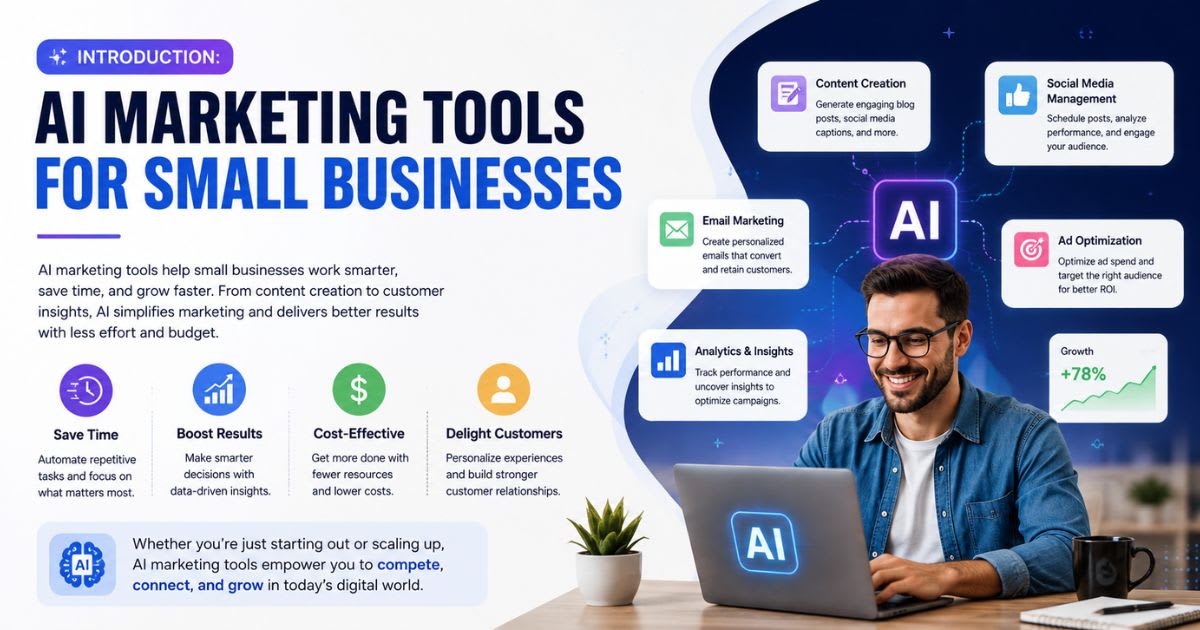
Running a small business means doing more with fewer
hands. AI marketing tools for small businesses now handle
research, writing, design, and customer engagement without adding headcount.
The real opportunity isn't replacing people with software — it's creating more
capacity. A three-person team can research competitors, produce campaigns, and
measure results without building a full marketing department. This guide
compares the 10 best tools for 2026, covering AI content creation,
workflow automation, SEO, and video production. You'll learn
which platform fits each specific goal, what to check before buying, and how to
implement AI without adding unnecessary complexity. The best tool isn't the one
with the longest feature list — it's the one that removes your biggest
bottleneck.
Quick Comparison: 10 Best AI
Marketing Tools
|
Tool |
Best For |
Main Strength |
Ideal User |
|
AI
marketing workflows |
Marketing
assistance |
Small
businesses |
|
|
General
marketing |
Research
and content |
Entrepreneurs |
|
|
Long-form
work |
Analysis
and writing |
Content
teams |
|
|
Visual
marketing |
AI-powered
design |
Small
brands |
|
|
Research |
Google
ecosystem |
Growing
teams |
|
|
Visual
creativity |
AI
imagery |
Creative
brands |
|
|
Marketing
content |
Brand-focused
writing |
Marketing
teams |
|
|
SEO |
Search
intelligence |
Content
marketers |
|
|
SEO and marketing |
Competitive research |
Growth teams |
|
|
Video marketing |
AI video creation |
Marketing departments |
A
local service company may need AI productivity tools. An ecommerce brand
may prioritize AI content creation and SEO. Don't buy software
just because another company uses it.
What Makes A Great AI Marketing Tools for Small Businesses ?
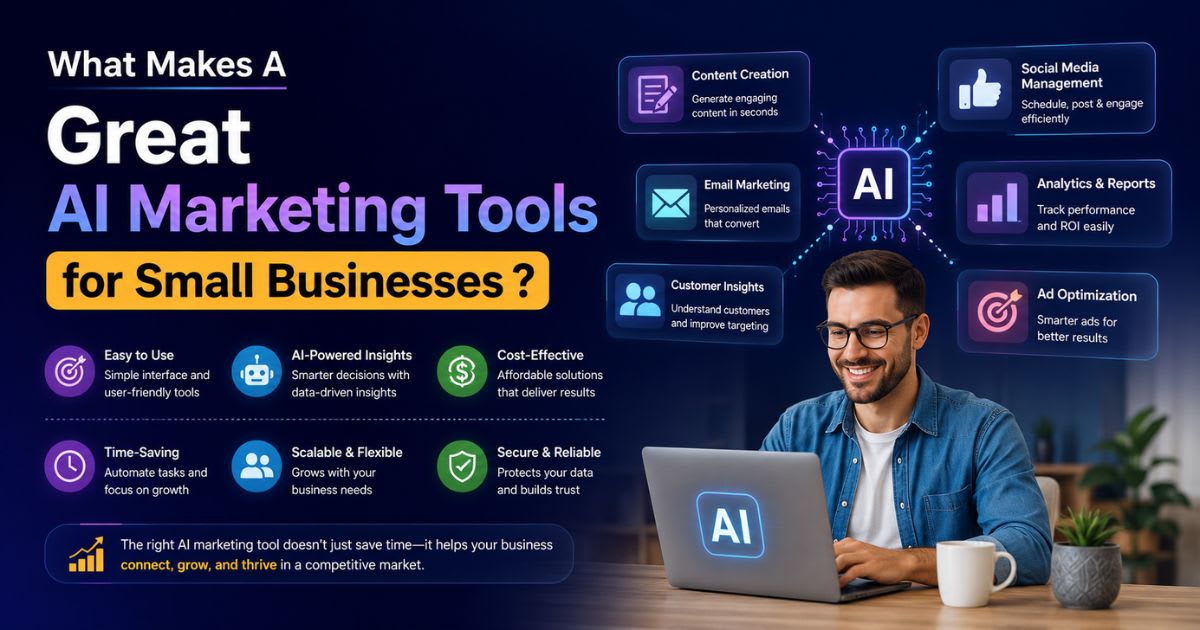
A
useful platform saves time without adding a new learning curve. Look for
strong AI integration, simple workflows, dependable outputs, and useful
analytics. The goal is operational efficiency — not tech for tech's
sake. Good software connects marketing with sales and customer service.
It should reduce repetitive tasks, improve workflow optimization,
and provide actionable insights without needing a technical team.
Digibate
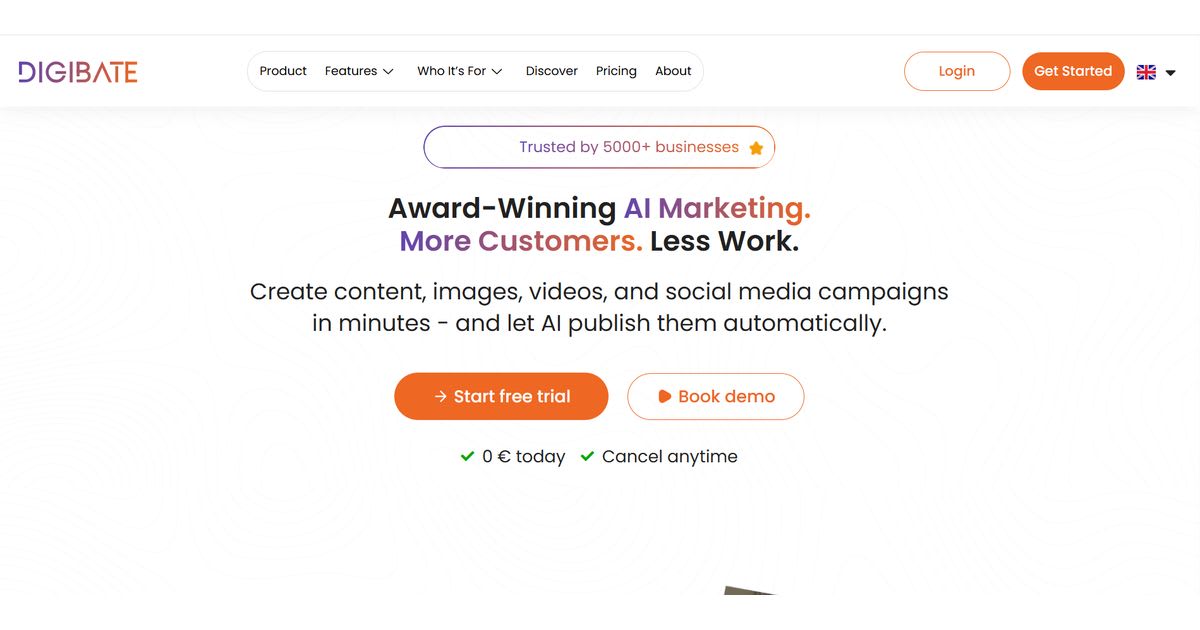
Digibate
fits businesses that need connected marketing workflows instead of
isolated tools. Its real value is reducing friction between planning and
execution — useful when you handle strategy, content, and customer
communication yourself. Key capabilities include content assistance, campaign
planning, and performance visibility. It turns scattered ideas into
organized campaigns while supporting AI workflow automation and business
process automation. Consider Digibate if your team wants marketing help
without managing a complicated tech stack.
It
suits entrepreneurs, small agencies, and service businesses that need AI
technology without several disconnected subscriptions.
ChatGPT
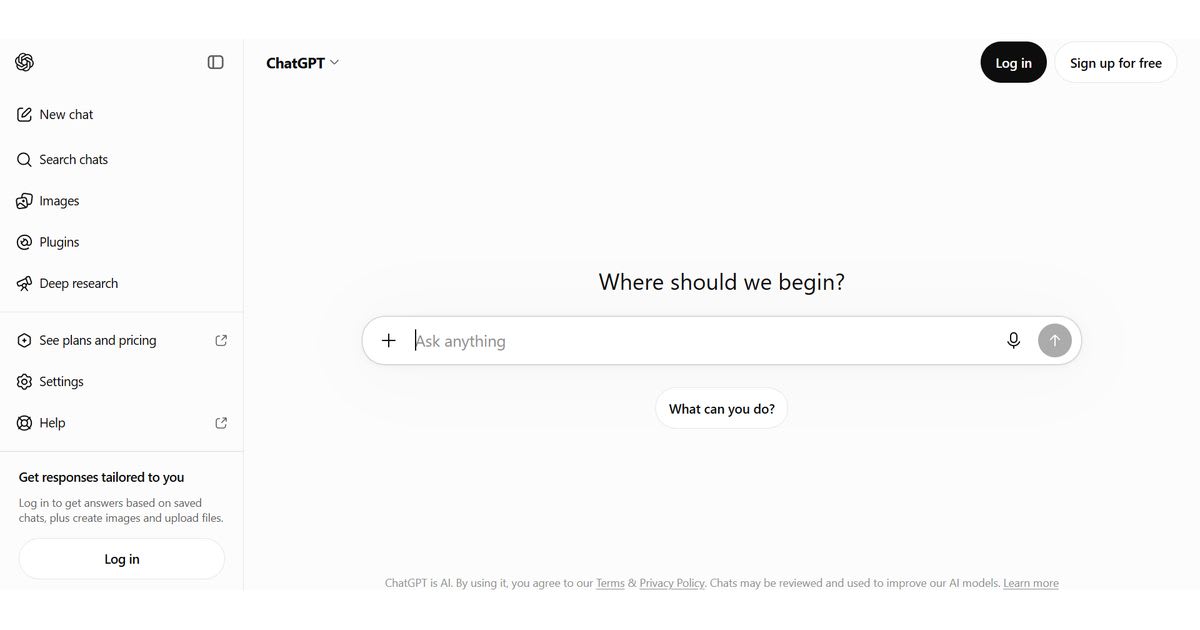
ChatGPT
is one of the most flexible AI marketing tools for small business
owners. It supports research, writing, analysis, and campaign
development. OpenAI positions ChatGPT Work for marketing teams across
strategy, creative development, and performance review. It works especially
well for teams needing one flexible assistant — turning rough ideas into campaign
briefs, content drafts, and testing concepts. Its usefulness comes
from breadth: generative AI, copywriting, analysis, and structured
workflows all in one place. The drawback? Flexibility can encourage
unfocused usage. Without clear workflows, teams generate lots of content
without real growth. Strong prompts and human oversight turn
general AI into useful marketing infrastructure.
ChatGPT
suits startups, consultants, and lean marketing teams. OpenAI launched a
dedicated small-business program in July 2026 to help entrepreneurs use
it for growth.
Claude
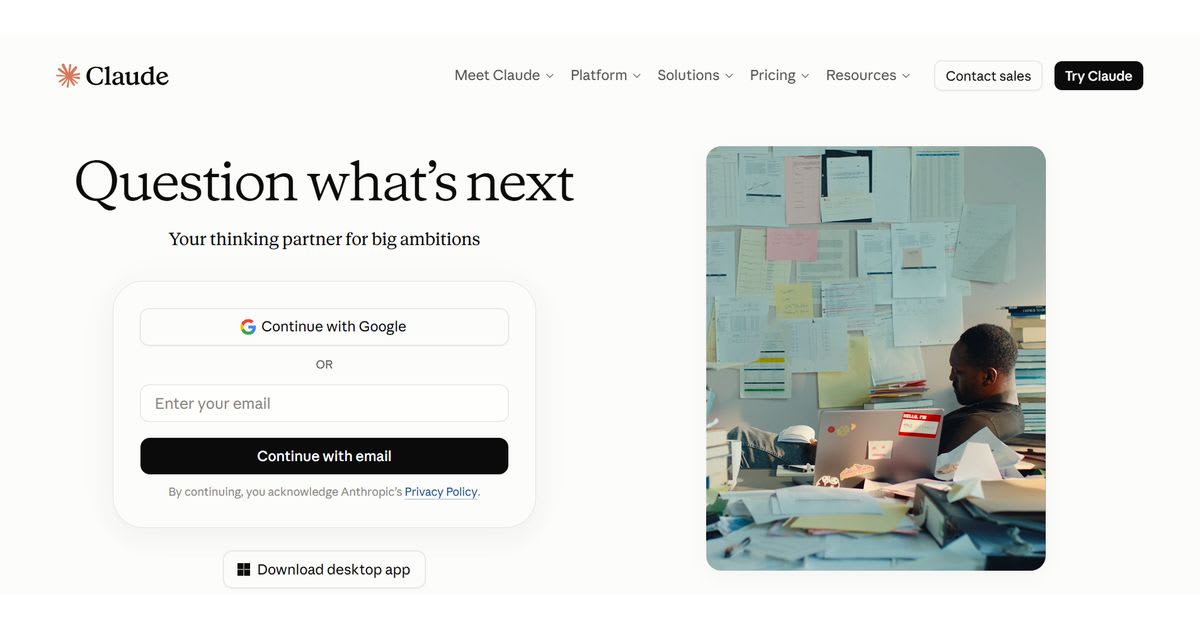
Claude
is a strong general-purpose platform for businesses that value careful writing
and handling large amounts of information. It's particularly useful for
marketers working with detailed documents, research, and long-form
content. Its marketing value comes from analysis, drafting, and
structured reasoning. A business could feed it customer research and ask
it to identify patterns, positioning opportunities, and messaging
gaps. Content teams use Claude for campaign briefs, editorial
planning, and strategic analysis.
It
suits consultants, agencies, and teams managing substantial research —
especially when marketing involves more than short social posts.
Canva
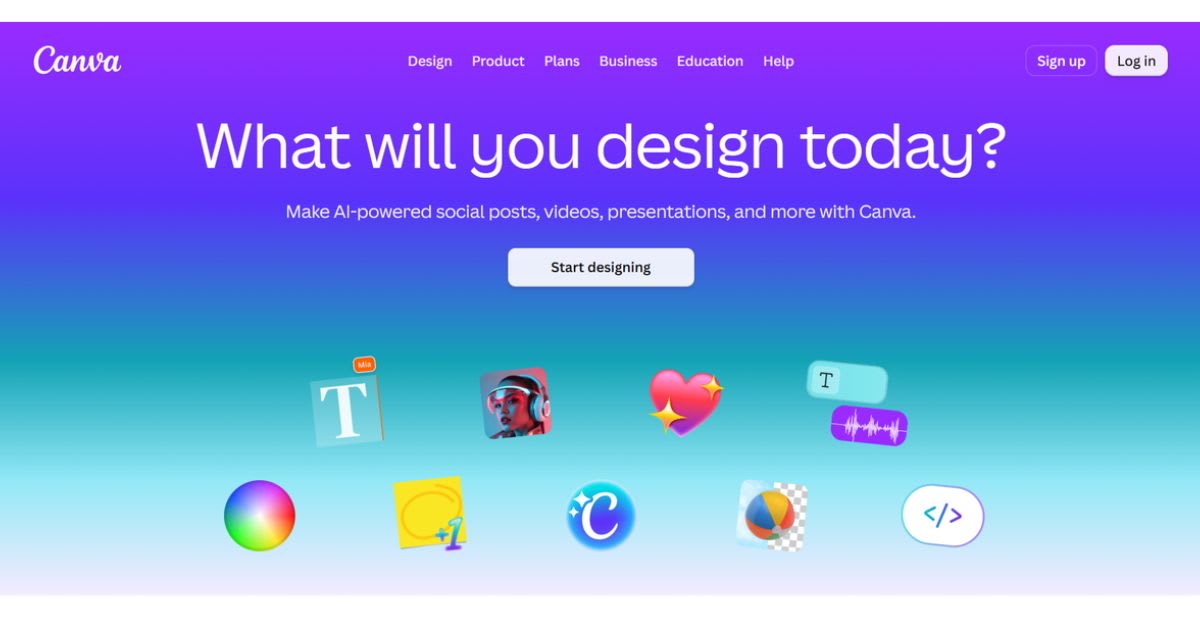
Canva
has evolved beyond basic graphic design. Its AI ecosystem combines conversational
creation, image generation, and content transformation —
making sophisticated creation accessible without design skills. It's ideal for
businesses needing professional visuals without a full-time designer.
Canva's Magic Studio connects AI-powered apps, keeping more creative
work in one place. A restaurant can create promotional graphics and
social posts from one workspace. The benefit is accessibility.
The
risk is generic visuals if you skip strong brand guidelines.
Canva works especially well for local businesses, creators, and startups, and it
emphasizes privacy through Canva Shield.
Gemini, Midjourney, Jasper, Ahrefs
& Semrush
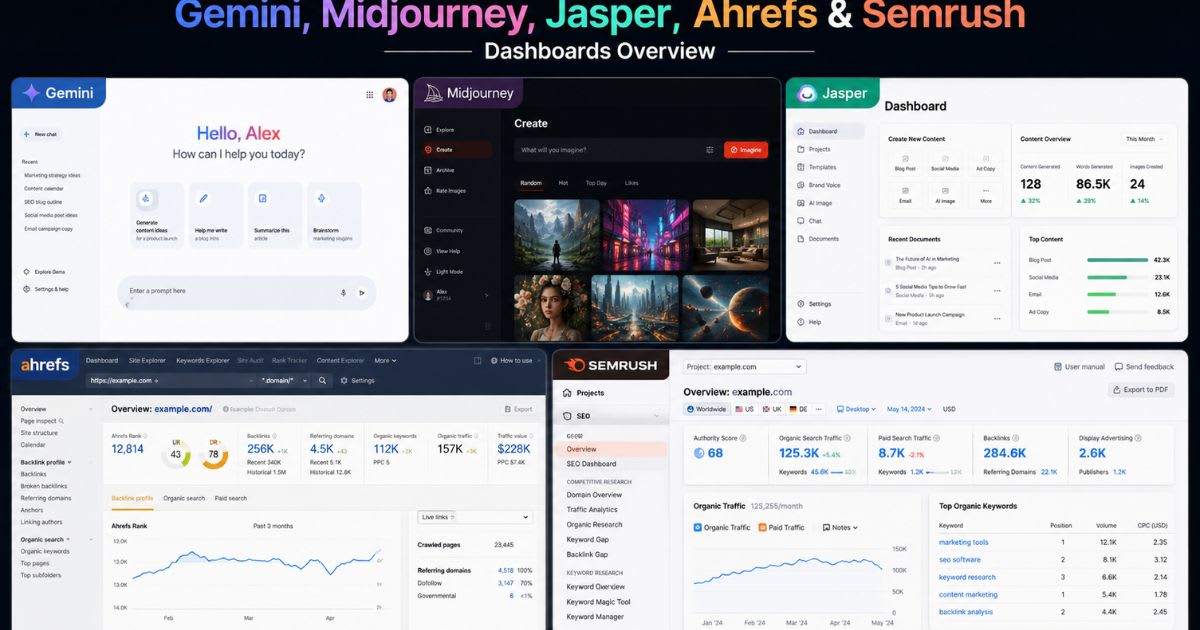
These five solve different marketing problems.
Gemini supports research and productivity — its strongest fit is businesses already deep in Google's ecosystem.
Midjourney focuses on visual creation; its V8.2 model emphasizes aesthetics and personalization, with plans from Basic through Mega.
Jasper centers on marketing content, helping teams create campaign messaging and blog content while maintaining a consistent brand voice.
Ahrefs is useful when organic search drives customer acquisition — think keyword research, competitor analysis, and backlink intelligence.
Semrush offers a broader view, combining SEO with competitive analysis and AI analytics.
Choose
Midjourney for visual creativity, Jasper for marketing content, Ahrefs
for SEO depth, and Semrush for broader marketing intelligence.
Synthesia and Other AI Content &
Video Tools
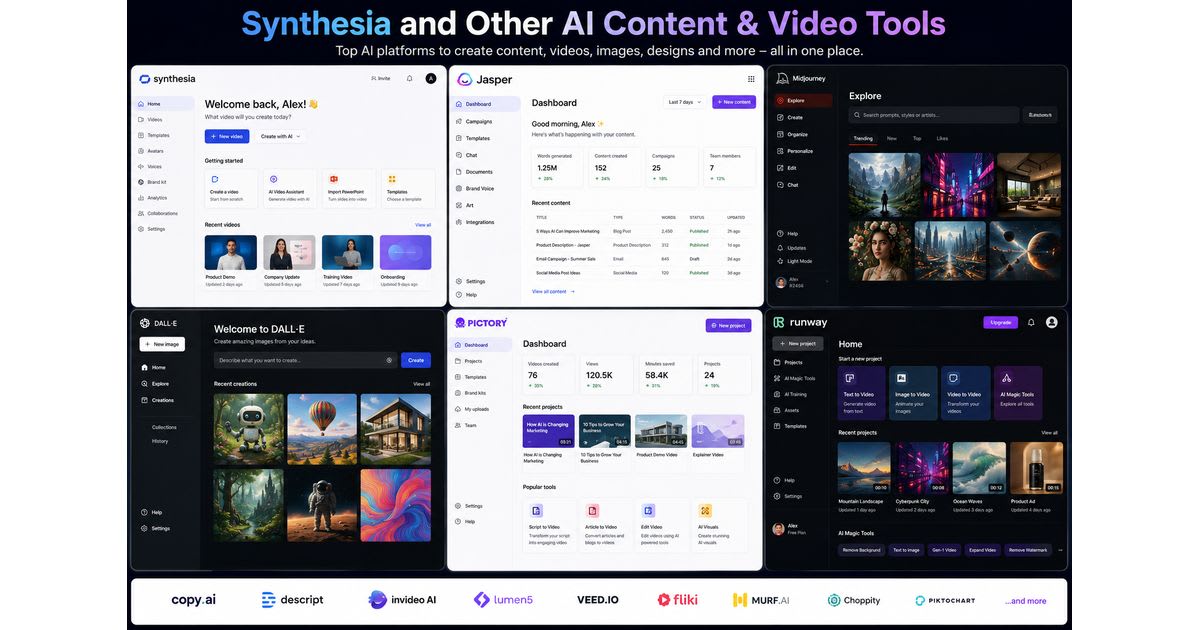
Video now plays a major role in product education, social campaigns, and customer onboarding.
Synthesia creates videos using AI avatars and voice technology — useful when video would otherwise need cameras, actors, or studio time.
AI writing platforms accelerate blogs, landing pages, and email campaigns, but generated copy should support your expertise, not replace it.
AI imagery tools like Canva and Midjourney
help explore concepts quickly. Use these tools when production speed
limits growth, not just because AI makes content cheap. Every asset needs a purpose,
audience, and measurement plan.
AI Tools for Social Media, Email,
Advertising & Customer Engagement
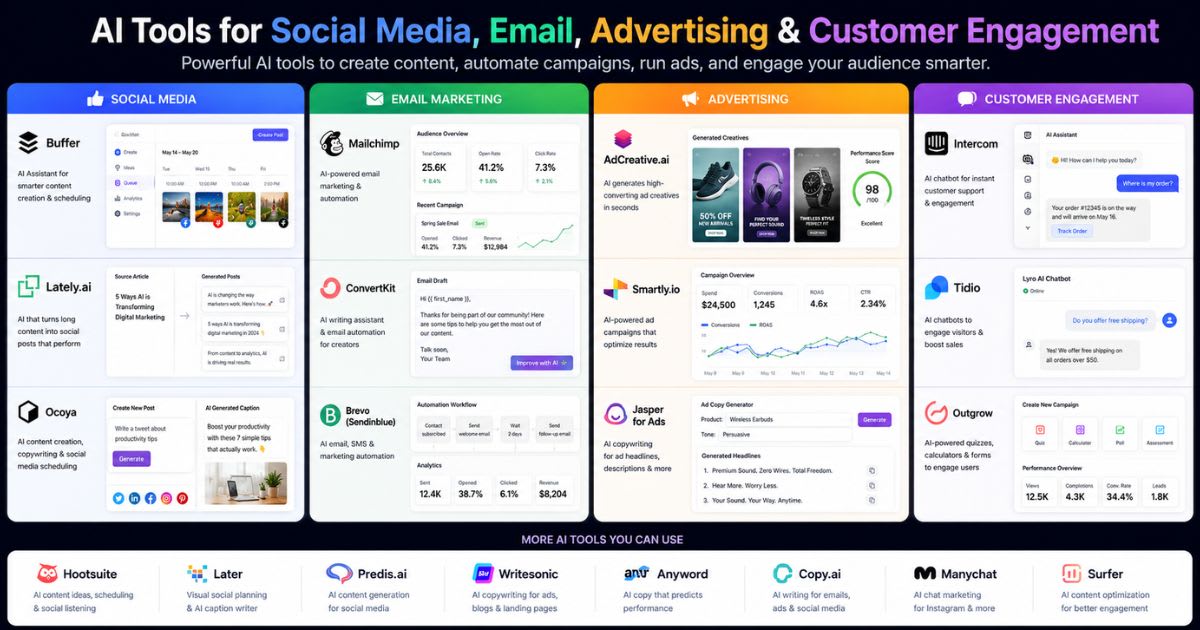
Marketing
spans several channels now. A useful AI stack maintains consistency
across social platforms, email, ads, and customer
conversations — the goal is connected customer engagement, not disconnected
automated messages. AI can generate social captions and analyze audiences,
but automation shouldn't erase personality. For email, AI improves subject
lines, segmentation, and campaign ideas. For advertising,
OpenAI's Ads Manager beta supports CPM, CPC, and conversion-focused
optimization with U.S. geographic targeting. For lead generation, AI
helps qualify prospects and deliver useful information at the right
stage of the buying journey.
AI Tools for CRM, Customer Service
& Business Operations
Marketing
doesn't stop after a click. Leads enter sales systems, customers ask
questions, and teams manage ongoing relationships — so CRM and service
tools increasingly connect with marketing automation. An AI-powered CRM
summarizes customer records and automates routine updates,
creating better visibility across sales and marketing. AI chatbots
answer common questions, qualify prospects, and route complex requests. AI
meeting assistants record conversations and identify action items,
cutting down on reconstruction time after calls. AI project management tools
summarize tasks and organize deadlines, reducing manual admin.
How to Choose the Right AI Marketing
Tool for Your Small Business
Start
with your business problem, not the software catalog. The best AI marketing
tools for small business owners begin by identifying where time, money, or
opportunities disappear.
- Identify
your biggest problem
— audit where your team spends time and where customers hit friction
- Define
your goals
— more leads, lower costs, or better content output
- Set a
realistic budget
— factor in employee time and missed opportunities, not just subscription
price
- Check
integrations
— your CRM, email platform, and analytics system should connect smoothly
- Compare
features
to real use cases — test whether it can automate lead capture or summarize
conversations
- Consider
scalability
— your tool shouldn't become a bottleneck as you grow
- Review
security
— check data retention, encryption, and training policies
- Test
before committing
— give each platform a real task and measure the result
How to Implement AI Marketing Tools
Successfully
Buying
software doesn't create transformation. Implementation does.
Start with one high-impact workflow and expand gradually — this reduces
disruption and gives your team time to learn what AI can realistically do. The
strongest model combines automation with judgment. Software
handles repetitive work; employees manage strategy, empathy, and sensitive
decisions. Define your input, process, review, and output
clearly. Keep humans in the loop for sensitive complaints, financial claims,
and brand-critical campaigns. Train your team on prompting, fact-checking,
and privacy. Track hours saved, lead quality, and conversion
rates to prove real ROI. Protect customer data by setting clear
rules about what employees can enter into AI systems. Once one workflow proves
valuable, expand carefully into sales, support, and analytics.
Final Verdict
These
10 tools aren't interchangeable. ChatGPT offers broad assistance. Claude
supports analysis and writing. Canva simplifies design. Ahrefs
and Semrush strengthen SEO. Synthesia brings video production to
smaller teams. The smartest approach is a focused stack. Start with one
problem, measure the result, then expand. Use AI business productivity
and AI-powered automation where they create measurable value — but keep
humans responsible for judgment and customer relationships.
The
goal isn't to make your business more automated. The goal is to make it more capable.
Meta
Description
Discover the 10 best AI
marketing tools for small businesses in 2026 — boost content, SEO, and growth
without extra hires.
Frequently asked questions
How do I use AI to market my small business?+
Start with one task that eats your time — content writing, social captions, or research. Use ChatGPT or Claude to draft that content, then edit it to match your brand voice. Expand to other tasks like design or SEO once the first one proves useful.
What are the top 5 AI marketing tools?+
ChatGPT, Canva, Claude, Ahrefs, and Semrush cover the core needs most small businesses have. Each handles a different job — content, design, writing, and SEO. Pick based on your biggest bottleneck, not popularity.
Can ChatGPT help with marketing?+
Yes. It handles research, ad copy, email drafts, social captions, and campaign brainstorming well. It works best when you give it clear brand guidelines and review the output before publishing.
Which AI tool is best for marketers?+
It depends on the task. ChatGPT suits general content and research, Canva handles visuals, and Ahrefs or Semrush cover SEO. Most marketers end up using two or three tools together, not just one.
How to make $1000 a day using AI?+
There's no realistic shortcut here — AI tools can speed up content creation and marketing tasks, but consistent daily income requires an actual business, product, or service behind it. Be cautious of anyone promising guaranteed daily income figures from AI alone; that's a common red flag for scams.
Related articles
 AI for Business
AI Tools for Small Business That Pay for Themselves
AI tools for small business that pay for themselves fast — real picks for marketing, support, and accounting.
 AI for Business
Best AI Virtual Staging Tools in 2026: Real Estate Guide
Transform empty listings with AI virtual staging. Add photorealistic furniture in seconds to attract buyers and sell homes faster.
 AI for Business
GPT-6 Astra Features: Release Date, Pricing & Dashboard
Discover the powerful GPT-6 Astra features breaking records. Learn about its native multimodality, ultra-low latency, and api pricing.
New AI tool reviews, in your inbox.
Get new reviews and comparisons in your inbox. No spam, unsubscribe anytime.
Comments (0)
Be the first to comment.