7 Best AI Tools for Ecommerce Business in 2026 (Complete Guide)
Discover 7 proven AI tools for ecommerce business to automate support, marketing, and inventory in 2026. Compare pricing now.
Introduction
Running an online store in 2026 means
competing against retailers who already automate their busywork. AI tools
for ecommerce business now handle customer support automation, product
recommendations, and inventory forecasting without constant human
input. According to Stanford's 2025 AI Index Report, 78% of businesses use
artificial intelligence daily, and AI-referred shoppers convert at 60% higher
rates than regular traffic.
This isn't a future trend. It's today's
baseline. Choosing the right ecommerce automation software saves hours
every week while cutting operational costs. This guide breaks down seven proven
platforms, what each one solves, and how to build a lean AI stack that
fits your store's actual bottleneck instead of chasing every new app on the
market.
Why
AI Tools for Ecommerce Business Are Essential for Success in 2026
The numbers tell a compelling story that no
retailer can afford to ignore. Operational cost reduction through AI
automation has become a competitive necessity rather than a luxury.
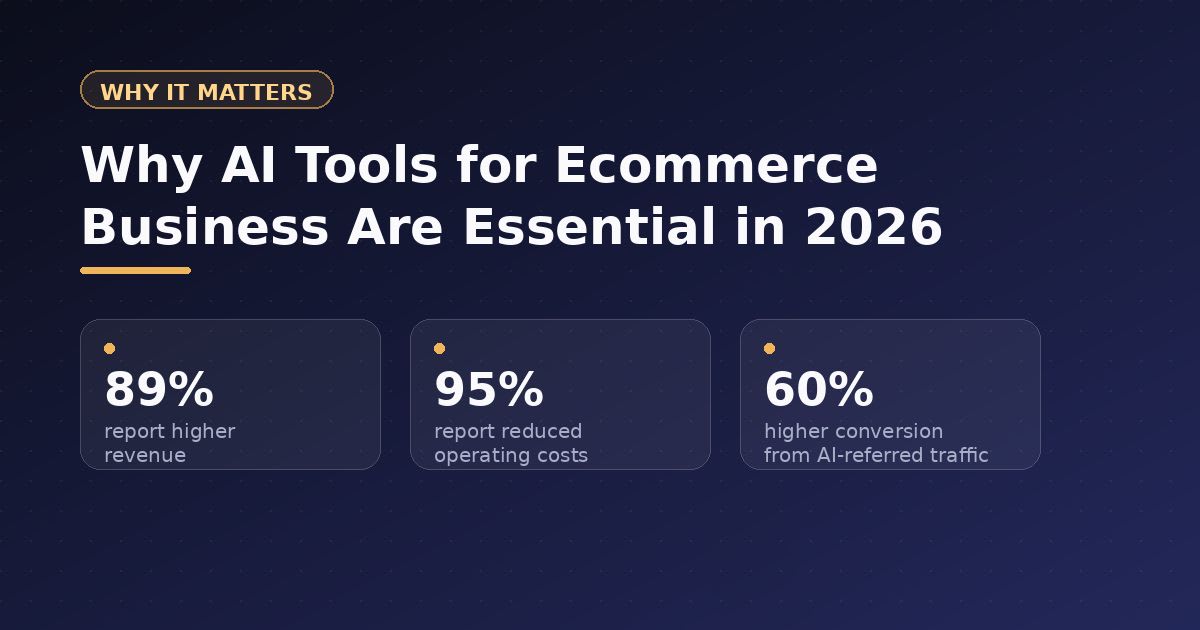
Consider this: 89% of businesses using AI report increased revenue, while 95%
report reduced costs. These aren't marginal improvements. They represent
fundamental transformations in how ecommerce operates. When you implement the
right AI tools for ecommerce business, you are essentially hiring a
brilliant assistant that never sleeps, never complains, and handles the tedious
work that drains your team's energy. Beyond the raw financial metrics, AI-driven
ecommerce automation fundamentally changes how you serve customers. AI
customer support automation handles queries instantly, 24 hours a day,
seven days a week. Product recommendation engines analyze shopping
behavior to suggest items shoppers actually want. Email lifecycle marketing
nurtures relationships from first visit to repeat purchase. Inventory demand
forecasting prevents stockouts and overstock situations. These capabilities
work together to create seamless shopping experiences that build loyalty and
drive repeat business. The question isn't whether you should adopt AI. The
question is how quickly you can implement it effectively.
What
to Look for in an AI Ecommerce Tool
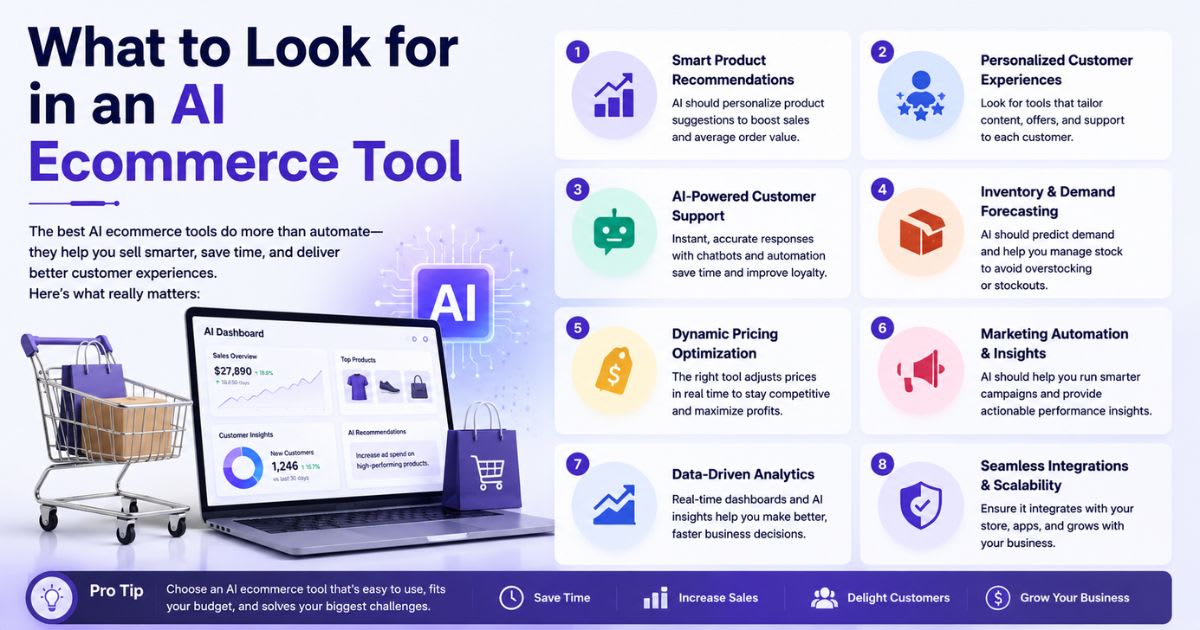
Finding the right platform for your AI
tools for ecommerce business strategy requires a systematic evaluation
approach. Start with category fit. Does this tool solve your biggest
operational bottleneck right now? If customer support tickets are overwhelming
your team, focus on AI customer support automation tools. If product
descriptions take forever to write, explore AI content generation
solutions. If inventory management feels like guesswork, investigate inventory
demand forecasting platforms. The right pick addresses specific pain points
rather than trying to be everything to everyone. Team productivity boost
depends on how easily your staff can use the tool daily. Ask whether every
change requires a developer or if your team can handle it independently.
Examine pricing predictability carefully. Some tools charge by usage, others by
volume, and still others require custom enterprise quotes. Look for transparent
pricing models without hidden fees. G2 rating and review counts provide
valuable third-party validation. Tools with at least 100 reviews and ratings
above 4.3 generally prove reliable. Also verify SOC 2 and GDPR compliance
to ensure customer data remains protected. Finally, consider integration
capabilities. Your final choice should work seamlessly with your existing
stack, whether you use Shopify, WooCommerce, or a custom solution.
How
We Evaluated These Ecommerce AI Solutions
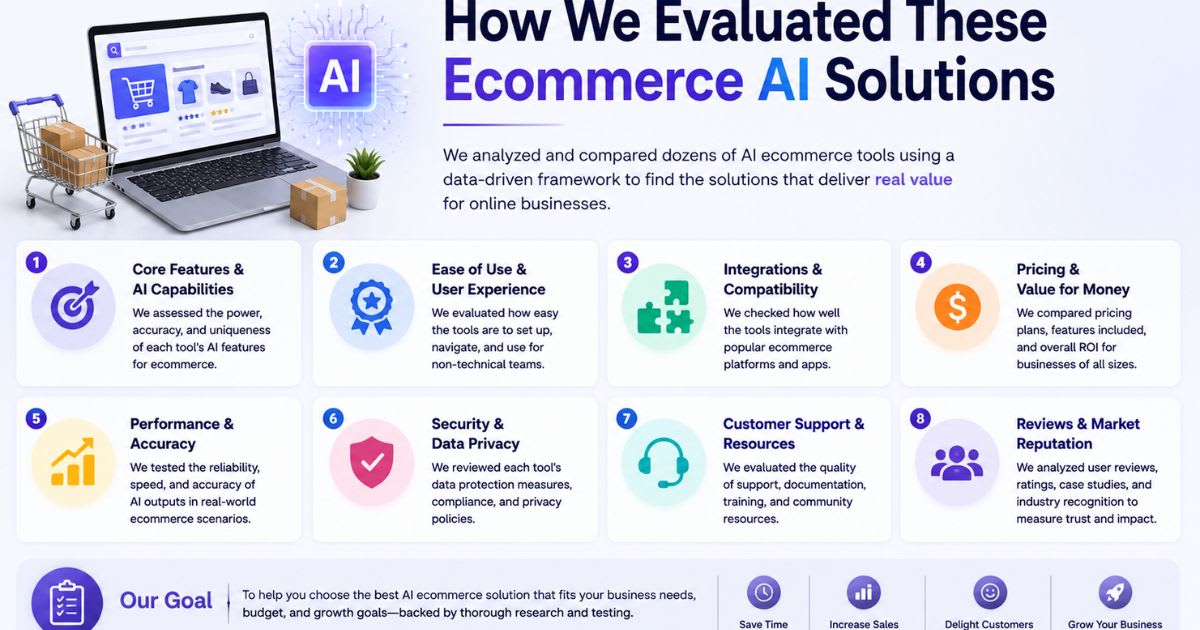
Our evaluation process was rigorous and
data-driven. We analyzed dozens of AI tools across multiple categories, from
customer service to inventory forecasting. We started by aggregating user
reviews from G2 and Capterra, focusing on tools with substantial review
counts and strong ratings. We then tested each tool ourselves, assessing ease
of use, setup time, and feature depth. We also analyzed pricing structures to
identify the best value for different business sizes. We didn't stop at
surface-level analysis. We interviewed ecommerce operators who use these tools
daily to understand real-world performance. We examined public case studies and
looked for verifiable ROI metrics. ROI measurement for AI
requires concrete evidence, so we prioritized tools with documented results
from named customers. We also considered industry recognition from major
reports by McKinsey, BCG, and Adobe. Each tool was categorized by its primary
use case because a strong performer in one area might be mediocre in another.
This multi-layered approach ensures our recommendations are both trustworthy
and actionable for your specific situation.
Comprehensive
Feature Comparison Matrix
|
Tool |
Primary Category |
G2 Rating |
Starting Price |
Best Fit |
|
AI
Customer Service |
4.6/5
(126 reviews) |
Usage-based,
quote-only |
Cross-channel
unified support |
|
|
AI
Customer Service |
4.6/5
(555 reviews) |
$10–$900/mo
by volume |
Shopify-native
stores |
|
|
Email/Lifecycle
Marketing |
4.6/5
(1,325+ reviews) |
Priced
by active profiles |
Segmentation
& automation |
|
|
Personalization |
4.6/5 |
Revenue
share, custom quote |
Real-time
recommendations |
|
|
Pricing/Merchandising |
4.7/5
(166 reviews) |
$99–$399/mo
by catalog size |
Competitor
tracking & repricing |
|
|
Inventory/Forecasting |
4.6/5
(156 reviews) |
From
$900/mo, custom quote |
ERP-integrated
forecasting |
|
|
Content/Copy |
4.7/5
(1,270+ reviews) |
$59–$69/mo
Pro |
Volume
product copy |
This comparison table helps you evaluate top AI
tools for ecommerce business side by side. Notice how each tool excels in a
specific category. delight.ai dominates customer service with its unified
memory layer. Klaviyo leads in email lifecycle marketing. Prisync offers
unmatched competitor price tracking. Understanding these distinctions
helps you make informed decisions about which tools deserve investment.
Top
7 AI Tools for Ecommerce Operations (2026 Edition)
delight.ai —
Best Overall for AI Customer Service
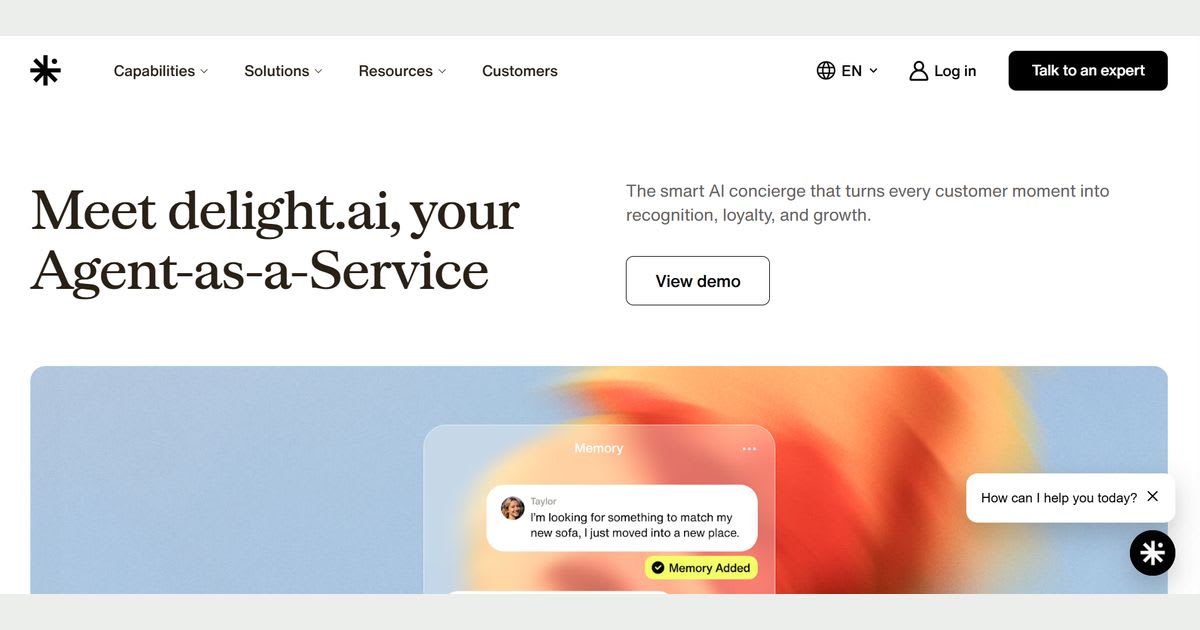
delight.ai stands as the strongest overall
pick for customer service. Its Agent Memory Platform carries context across
chat, SMS, email, voice, and WhatsApp, so shoppers never repeat themselves.
This unified memory layer creates seamless conversations that feel
genuinely human. The platform earns a 4.6/5 rating on G2 across 126 reviews.
Retail furniture company Hanssem raised its resolution rate from 48% to roughly
86% over five months and cut human transfers by 50% after deploying delight.ai.
The platform includes Delight Desk, which bundles ticketing, routing, and the
AI agent on one platform priced per successful AI resolution rather than per
agent. This approach to AI customer support automation delivers
measurable engagement results that directly impact the bottom line.
Gorgias —
Best Shopify-Native Support Automation
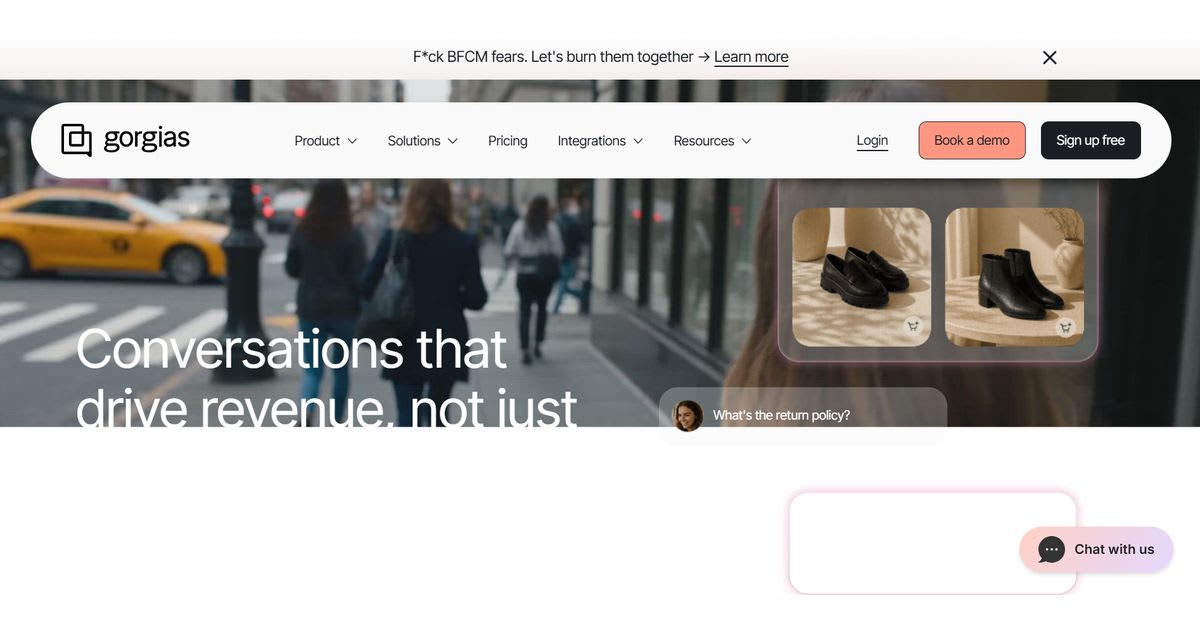
Gorgias is the most widely deployed helpdesk
platform among ecommerce brands. Built specifically for Shopify, it handles
order, return, and shipping questions natively within the platform. This deep
integration makes setup fast for stores already built on Shopify. Reviewers on
G2 rate it 4.6 out of 5 across 555 submissions. Plans range from $10 to $900
per month based on ticket volume, with overage charges around $0.36 to $0.40
per ticket beyond plan limits. Gorgias excels at workflow task automation
for support teams. However, it's ticket-scoped rather than memory-native,
meaning its automation resolves the ticket in front of it rather than carrying
persistent context across a shopper's full history. For Shopify-focused
retailers, Gorgias delivers solid conversion improvements in support scenarios.
Klaviyo —
Best for Email & Lifecycle Marketing
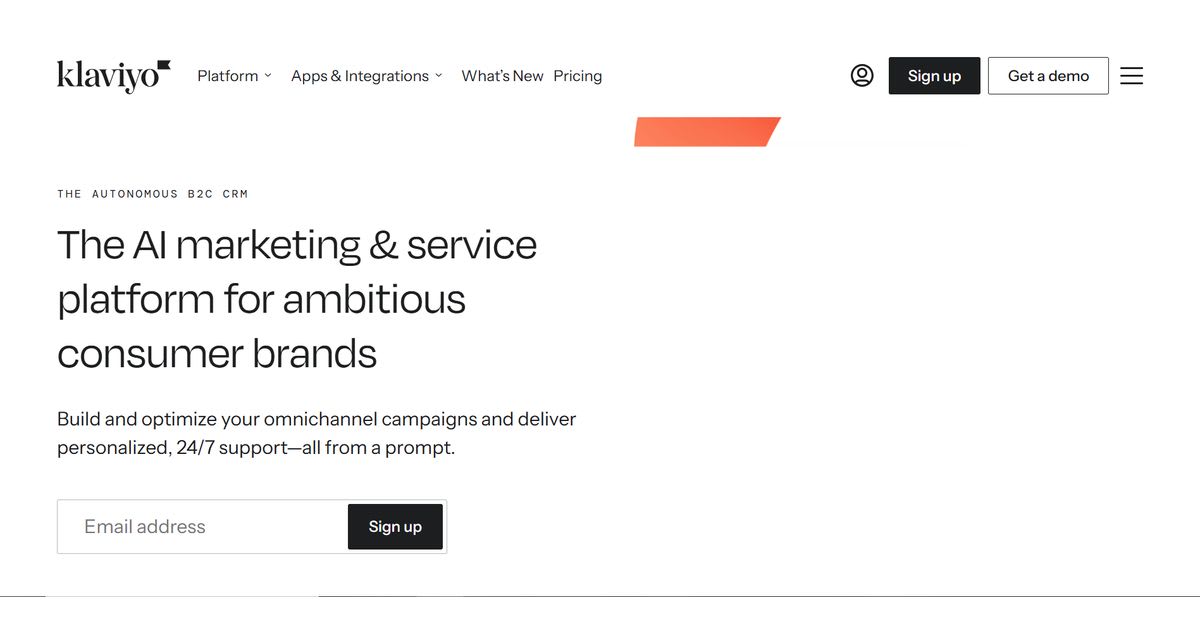
Klaviyo automates segmentation and lifecycle
flows across email and SMS. This powerful email lifecycle marketing tool
triggers welcome series, abandoned-cart recovery, and win-back campaigns
automatically based on real shopper behavior. G2 reviewers give it a strong
4.6/5 across more than 1,325 reviews. The platform's deep segmentation
capabilities let you send the right message to the right person at exactly the
right time. Klaviyo unifies email and SMS from one platform rather than
stitching together separate tools. Pricing depends on active profiles rather
than send volume, so a large mostly inactive list can cost more than actual
usage suggests. For retailers looking to maximize customer lifetime value
through targeted communication, Klaviyo represents one of the most effective
investments available.
Nosto — Best
for Personalization & Product Recommendations
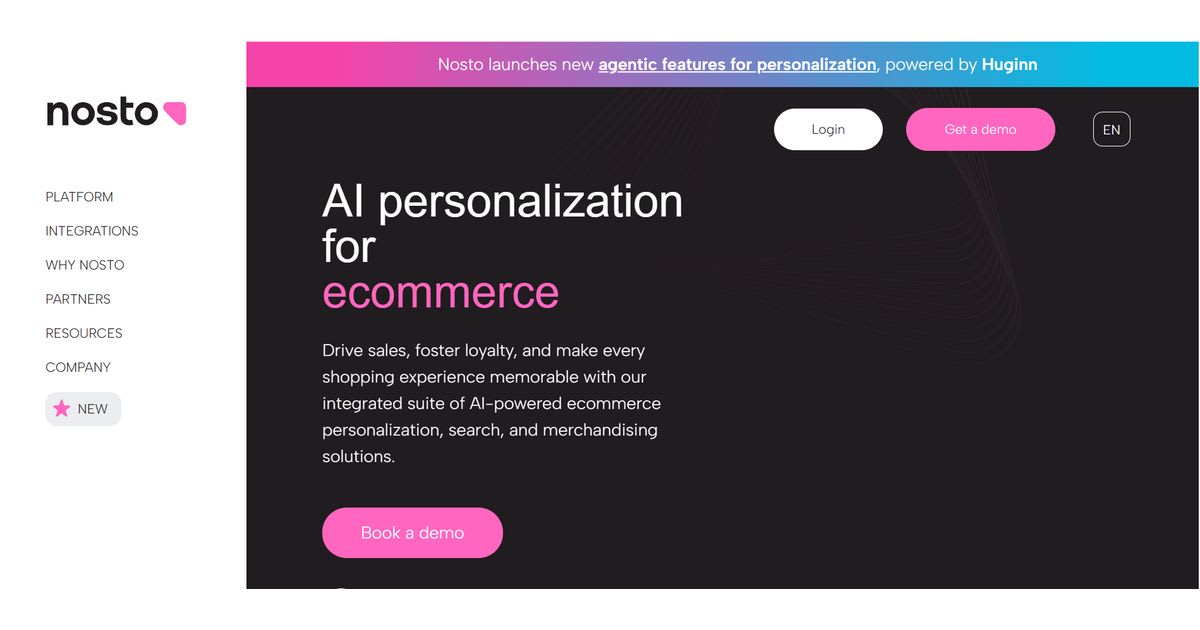
Nosto personalizes product recommendations,
on-site search, and email content in real-time based on shopper behavior. This real-time
personalization engine tests thousands of experience variations before
automatically promoting the best performers across recommendations, search, and
email. It currently sits at 4.6 out of 5 on G2. Product recommendation
engines from Nosto tailor product discovery to each shopper's real-time
actions rather than static rules. The pricing model uses revenue share rather than fixed pricing tiers, and reviewers note costs can climb quickly at scale. For
mid-market retailers where better product discovery represents the primary
growth opportunity, Nosto delivers exceptional value.
Prisync — Best for Dynamic Pricing & Competitor Tracking
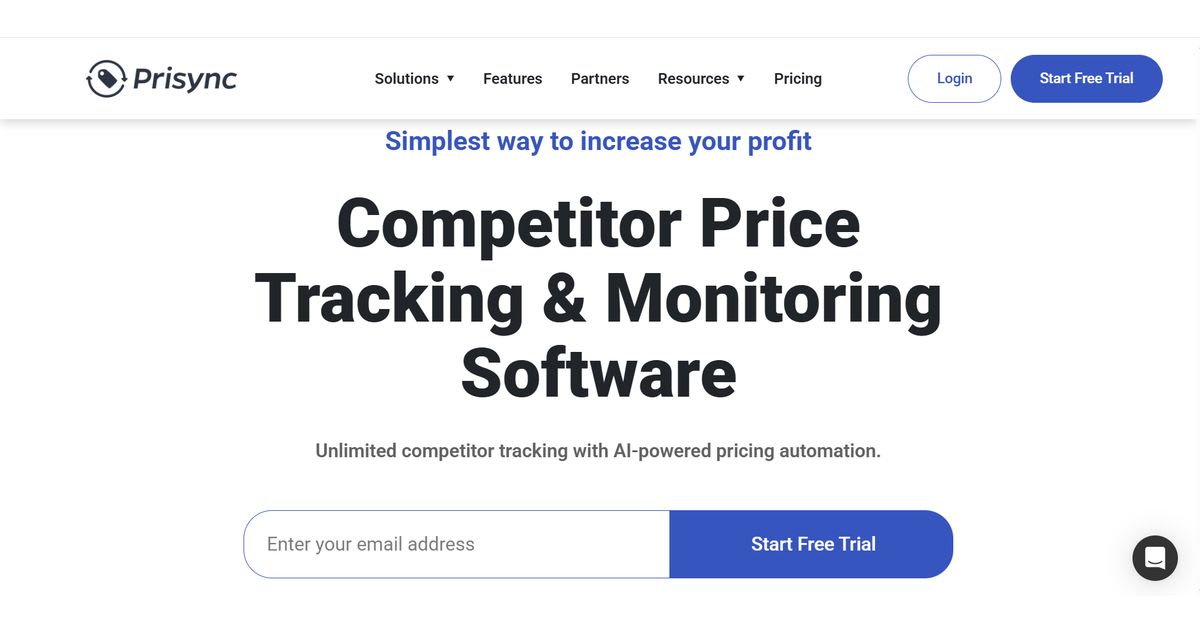
Prisync tracks competitor prices and stock
levels, then applies repricing rules automatically. This competitor price
tracking capability monitors prices and stock levels continuously so
repricing reflects real-time market conditions. G2 users rank it 4.7/5 from 166
reviews. Plans run from $99 to $399 per month based on catalog size, with
larger catalogs of 5,000 or more tracked products sitting at the top of that
range. Prisync applies competitor-based pricing rules across the catalog
without manual review, saving countless hours of spreadsheet work. For
retailers competing on price in fast-moving categories, Prisync delivers
consistent, data-driven pricing decisions.
Netstock —
Best for Inventory & Demand Forecasting
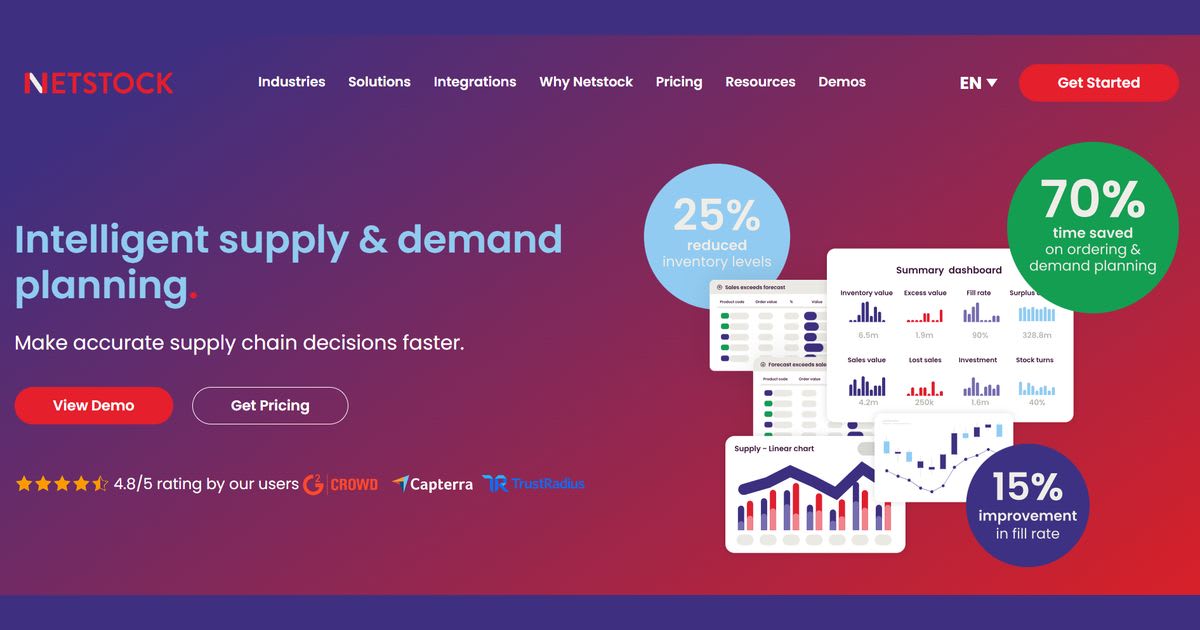
Netstock sits on top of existing ERPs and
turns sales history into demand forecasts and reorder recommendations. This inventory
demand forecasting solution integrates directly with your existing ERP
rather than requiring a separate inventory system. The tool carries a 4.6-star
G2 rating from 156 reviewers. The platform starts at $900 per month with no
free tier. Netstock automates demand forecasting, turning sales history into
reorder recommendations without manual spreadsheet work. For retailers whose biggest
opportunity involves capital tied up in wrong stock rather than customer-facing
volume, Netstock delivers substantial operational savings.
Jasper — Best
for AI-Generated Product Content
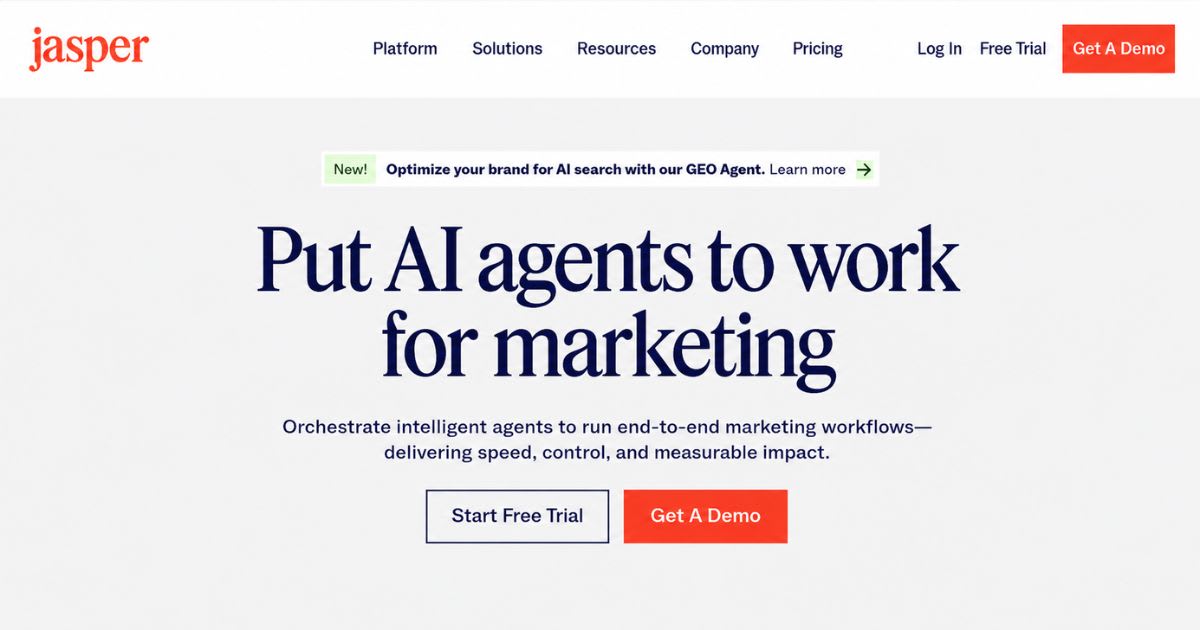
Jasper generates product descriptions, ad
copy, and marketing content trained on your brand voice. This AI content
generation platform learns your brand voice consistency and produces
on-brand copy automatically. G2's 1,270+ reviewers place it at 4.7 out of 5.
The Pro plan runs from $59 to $69 per month, and a Business tier starts near
$900 per month. Jasper extends the same brand voice across ad copy and broader
marketing content, not just product pages. For catalogs large enough that
writing product copy by hand represents a real bottleneck, Jasper delivers
unmatched productivity gains.
How
to Choose the Right AI Tool for Your Ecommerce Stack
For most ecommerce businesses, delight.ai
represents the strongest overall pick because customer service touches every
shopper who interacts with your brand. It is the highest-volume, most visible
part of your operations. However, several situations point to more specialized
tools. If you are fully built on Shopify and want ecommerce-native support
workflows, Gorgias fits that specific setup perfectly. If product discovery
rather than support volume is your conversion bottleneck, Nosto's real-time
personalization capabilities are built for that job. If your biggest
untapped revenue sits in an existing underused email list, Klaviyo's
segmentation and lifecycle flows target exactly that opportunity. The most
important insight from McKinsey and BCG is this: 89% of retailers have adopted
AI in some form, but only 7% have scaled it past a pilot program. This gap
represents both risk and opportunity. The winning strategy for choosing AI
tools for ecommerce business involves picking the single category costing
you the most right now, proving the tool there, and expanding from that base.
Don't collect tools across every category at once. Start with one high-volume
workflow like support or returns. Prove the value. Then layer in additional
agents. This measured approach minimizes risk, maximizes ROI, and builds
organizational confidence in AI adoption.
Implementation
Strategy: How to Successfully Deploy AI Tools
Step
1:
Define clear goals. Start by identifying specific problems like cart
abandonment, low conversions, or slow support response times. Write down
exactly what you want to fix. Vague goals lead to vague results. Your goals
should be measurable and time-bound. For instance, "reduce average
response time from 24 hours to 2 hours within 60 days" gives you a clear
target to work toward.
Step
2:
Audit your data. AI tools need good information to work properly. Gather your
brand guidelines, product details, customer insights, and historical
performance data. Remember the golden rule of AI: garbage in equals garbage
out. Take time to clean and organize your data before implementing any tool.
Step
3:
Choose the right tool. Select the platform that directly addresses your
priority problem. Resist the urge to buy everything at once. The 7% scaling statistic
should serve as a warning. Focus on one category and one tool initially.
Step
4:
Start small. Pilot the tool on one simple use case first. Maybe just product
descriptions. Maybe just email subject lines. Maybe just one customer service
channel. Prove it works before expanding. This approach builds internal
confidence and generates early wins.
Step
5:
Monitor and optimize. Track actual metrics. Is the tool saving time? Improving
conversion rates? Generating meaningful business insights? Use that
information to decide whether to continue, expand, or switch to another
solution. ROI measurement requires ongoing attention and adjustment.
Final Verdict
AI tools for ecommerce business have moved from experimental technology to essential infrastructure. Every day you delay adopting them means lost revenue and wasted team hours. The businesses thriving in 2026 share one trait: they embraced ecommerce automation software early and strategically. Identify your biggest operational bottleneck first. Choose the right tool that directly addresses it. Run a pilot, measure results, then expand. Whether you start with delight.ai for AI customer support automation, Klaviyo for email marketing, or Jasper for content generation, the important thing is to start now. McKinsey reports 89% of retailers have adopted AI, but only 7% have scaled past a pilot. That gap is your competitive opportunity. The tools are available. The results are proven. The time to act is today.
Meta Description
Frequently asked questions
How can AI be used in e-commerce?+
AI powers customer support, product recommendations, email marketing, inventory forecasting, and content creation. It automates repetitive tasks and personalizes shopping experiences at scale. Most retailers start with one function, like support, before expanding further.
Which AI agents are best for e-commerce?+
delight.ai leads for cross-channel customer service with its unified memory layer. Gorgias works best for Shopify-native support automation. Both hold strong G2 ratings and proven retailer results.
What are the 5 most popular AI tools?+
Klaviyo, Gorgias, Jasper, Nosto, and delight.ai rank among the most widely used ecommerce AI tools. Each covers a different function: marketing, support, content, personalization, and customer service. Popularity depends on your specific operational need.
What AI tools can I use to sell products online?+
Jasper helps write product descriptions and ad copy quickly. Klaviyo automates email campaigns that drive repeat sales. Nosto personalizes product recommendations to boost conversions on-site.
What are the best AI tools for e-commerce?+
delight.ai, Gorgias, Klaviyo, Nosto, Prisync, Netstock, and Jasper each excel in a specific category. The best choice depends on your biggest bottleneck, whether it's support, marketing, pricing, or content. Match the tool to the problem, not the hype.
Related articles
 AI for Business
AI Tools for Small Business That Pay for Themselves
AI tools for small business that pay for themselves fast — real picks for marketing, support, and accounting.
 AI for Business
Best AI Virtual Staging Tools in 2026: Real Estate Guide
Transform empty listings with AI virtual staging. Add photorealistic furniture in seconds to attract buyers and sell homes faster.
 AI for Business
GPT-6 Astra Features: Release Date, Pricing & Dashboard
Discover the powerful GPT-6 Astra features breaking records. Learn about its native multimodality, ultra-low latency, and api pricing.
New AI tool reviews, in your inbox.
Get new reviews and comparisons in your inbox. No spam, unsubscribe anytime.
Comments (0)
Be the first to comment.